Hard-to-Place Condo Corporations: Insurance Challenges and Solutions in Canada
Habitational Risks with Prior Losses: What Canadian Property Owners Need to Know
December 12, 2025
Non-Profit Housing Providers: Insurance Considerations for Canadian Organizations
December 15, 2025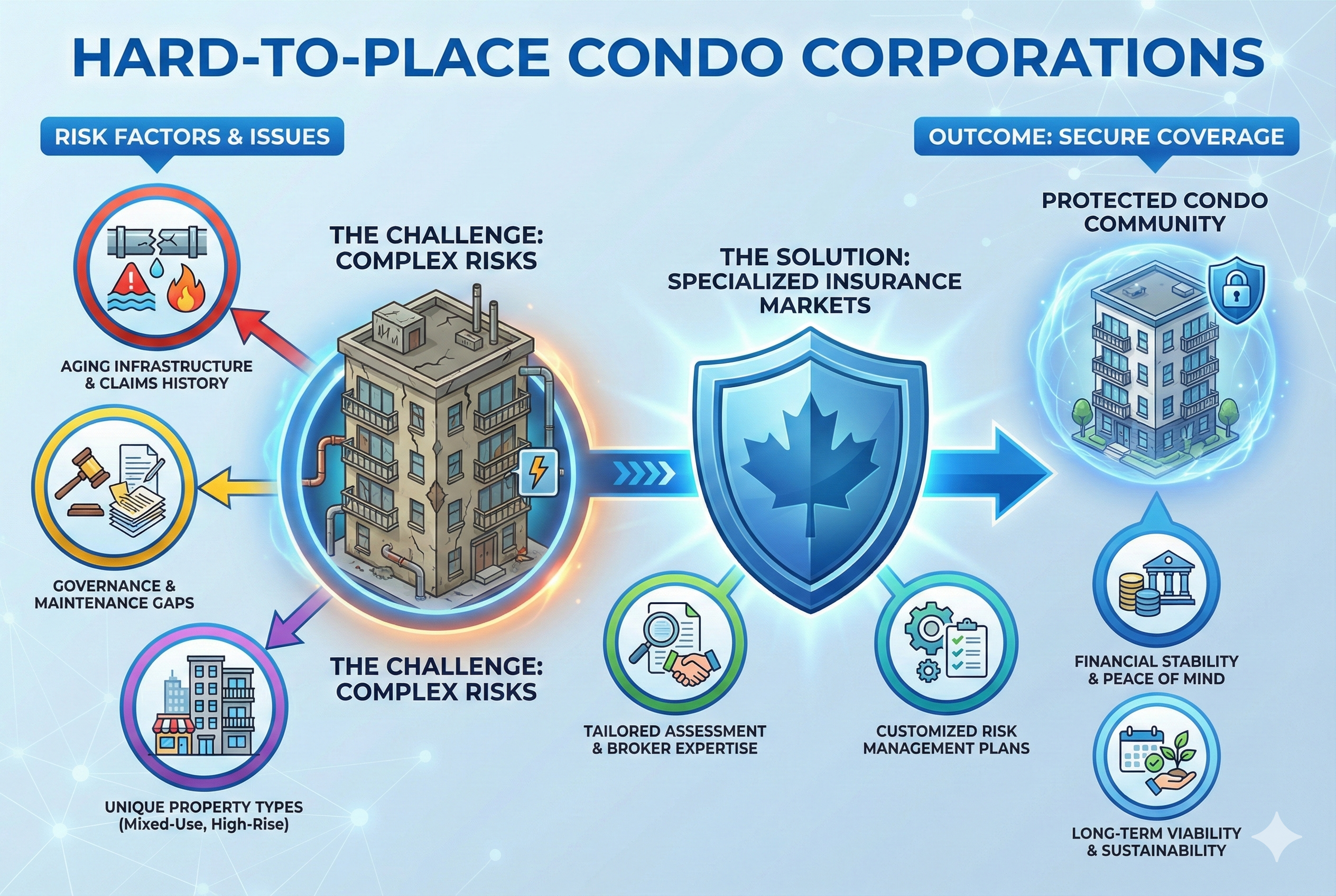
In Canada, securing insurance for condo corporations can be particularly challenging—especially for those deemed “hard-to-place.” Historical claims, high-risk locations, or unusual construction characteristics can all complicate the process. Here’s how to understand these challenges and navigate them effectively.
What Makes a Condo Corporation Hard-to-Place?
• High-Risk Locations
Condos situated in areas prone to flooding, earthquakes, or frequent fires often face higher premiums and fewer coverage options.
• Previous Claims
A history of repeated losses—particularly water or fire damage—can cause insurers to classify a building as high-risk, making it more difficult to obtain coverage.
• Unusual Building Features
Non-standard construction materials, outdated plumbing, or older building systems can increase maintenance needs and lead to more restrictive insurance availability.
Challenges of Hard-to-Place Condos
• Increased Premiums
Higher perceived risk often results in significantly elevated premiums for condo corporations.
• Limited Coverage
Insurers may exclude certain protections—such as water or flood coverage—when buildings fall within high-risk zones.
• Policy Denials
In some cases, insurers may decline to offer coverage altogether, leaving corporations with limited options.
Solutions for Hard-to-Place Condo Corporations
• Work with a Broker
An experienced insurance broker can guide condo boards through complex risks and help secure the most suitable coverage available.
• Mitigate Risks
Investing in maintenance, updating aging infrastructure, and implementing proactive risk-management practices can improve insurability and potentially reduce premiums.
• Tailored Coverage
Some specialized insurers offer custom policies designed specifically for higher-risk condo corporations.
Final Thoughts
Insuring a hard-to-place condo corporation can be challenging, but with the right support and a commitment to risk reduction, it’s possible to secure the protection your building needs.
Brokers can contact Total Risk Managers to discuss a risk.
This article is general information for insurance brokers. It is not advice, and it is not a quote or an offer of coverage. Policy wording decides what is covered. Coverage is arranged through a licensed insurance broker.