Commercial Buildings Under Renovation: What Canadian Business Owners Need to Know

Rural Properties with Limited Fire Response: What You Need to Know
December 20, 2025
Builder’s Risk for Large Projects: What Canadian Developers Must Know
December 23, 2025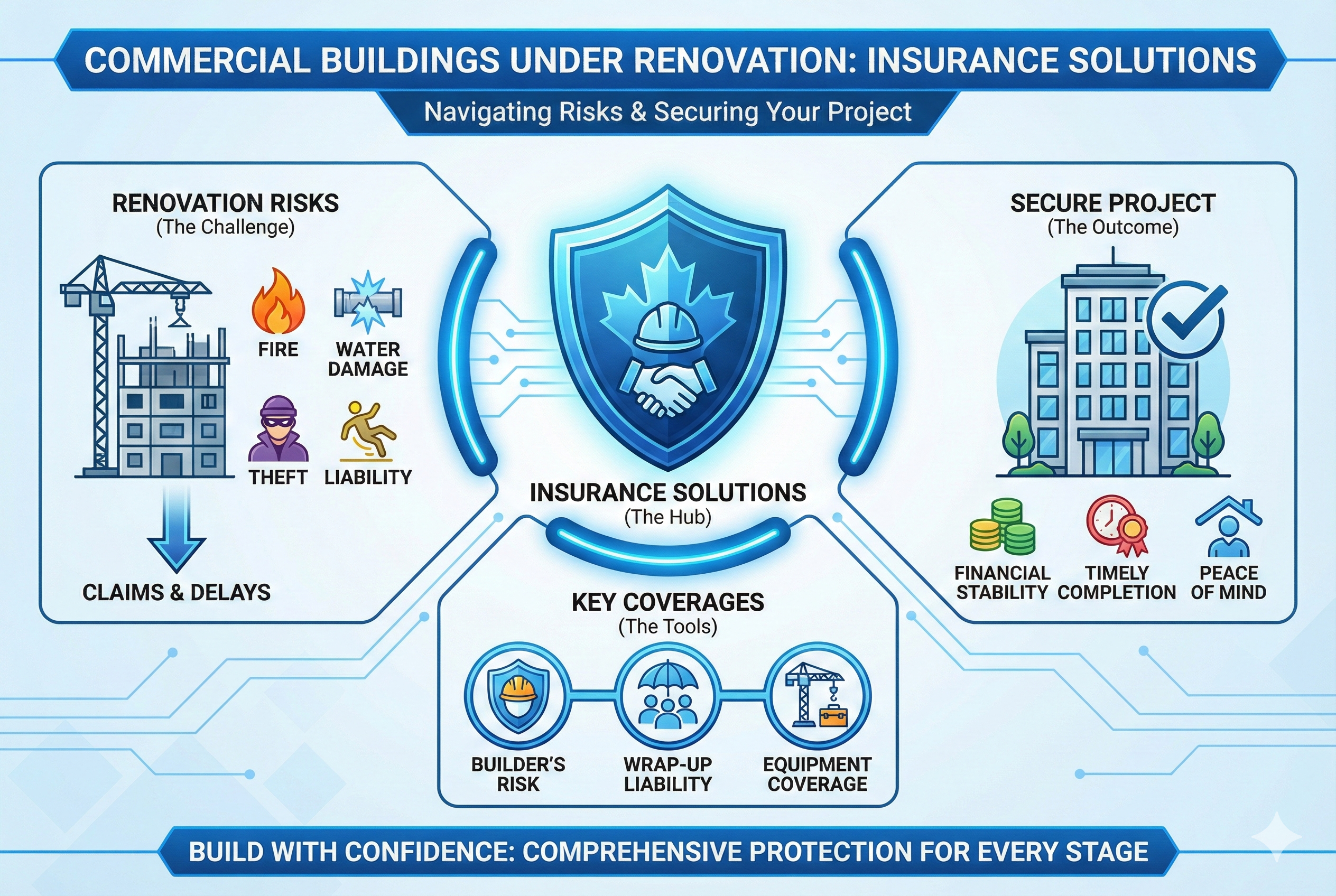
Renovating a commercial building can be an exciting opportunity—new layouts, modern upgrades, and improved functionality. But behind the scaffolding and construction dust lies a critical concern: proper insurance during the renovation process.
In Canada, commercial properties undergoing renovation require specialized insurance. Standard commercial property policies often don’t apply when a building is partially vacant, stripped down, or exposed to construction-related risks.
Key Insurance Considerations for Renovations
1. Builder’s Risk Insurance
This coverage is essential. It protects the building, materials, and on-site equipment against risks such as fire, theft, and vandalism—acting as temporary insurance while work is underway.
2. Increased Fire Hazards
Renovation activities like welding, electrical upgrades, and heating equipment elevate fire risks. Insurers may require hot-work permit programs or additional fire suppression measures.
3. Vacancy Concerns
If the building is fully or partially vacant, standard policies may limit or exclude coverage. A vacancy permit or policy endorsement is often needed.
4. Contractor Liability
Contractors should carry their own commercial general liability (CGL) insurance. Always confirm limits and request proof of coverage.
5. Protection of the Existing Structure
Even when only part of the property is being renovated, the existing structure remains vulnerable. Ensure your policy covers both completed work and the original building.
Renovations are an important investment—don’t let uncovered risks turn into costly setbacks. Partner with an experienced Canadian insurance broker to secure coverage that aligns with your project.
Brokers can contact Total Risk Managers to discuss a risk.
This article is general information for insurance brokers. It is not advice, and it is not a quote or an offer of coverage. Policy wording decides what is covered. Coverage is arranged through a licensed insurance broker.