
Concrete Contractors: Insurance Essentials in Canada
Welders & Mobile Welding Operations: Insurance Essentials in Canada
March 27, 2026
Paving Contractors: Insurance Essentials in Canada
March 30, 2026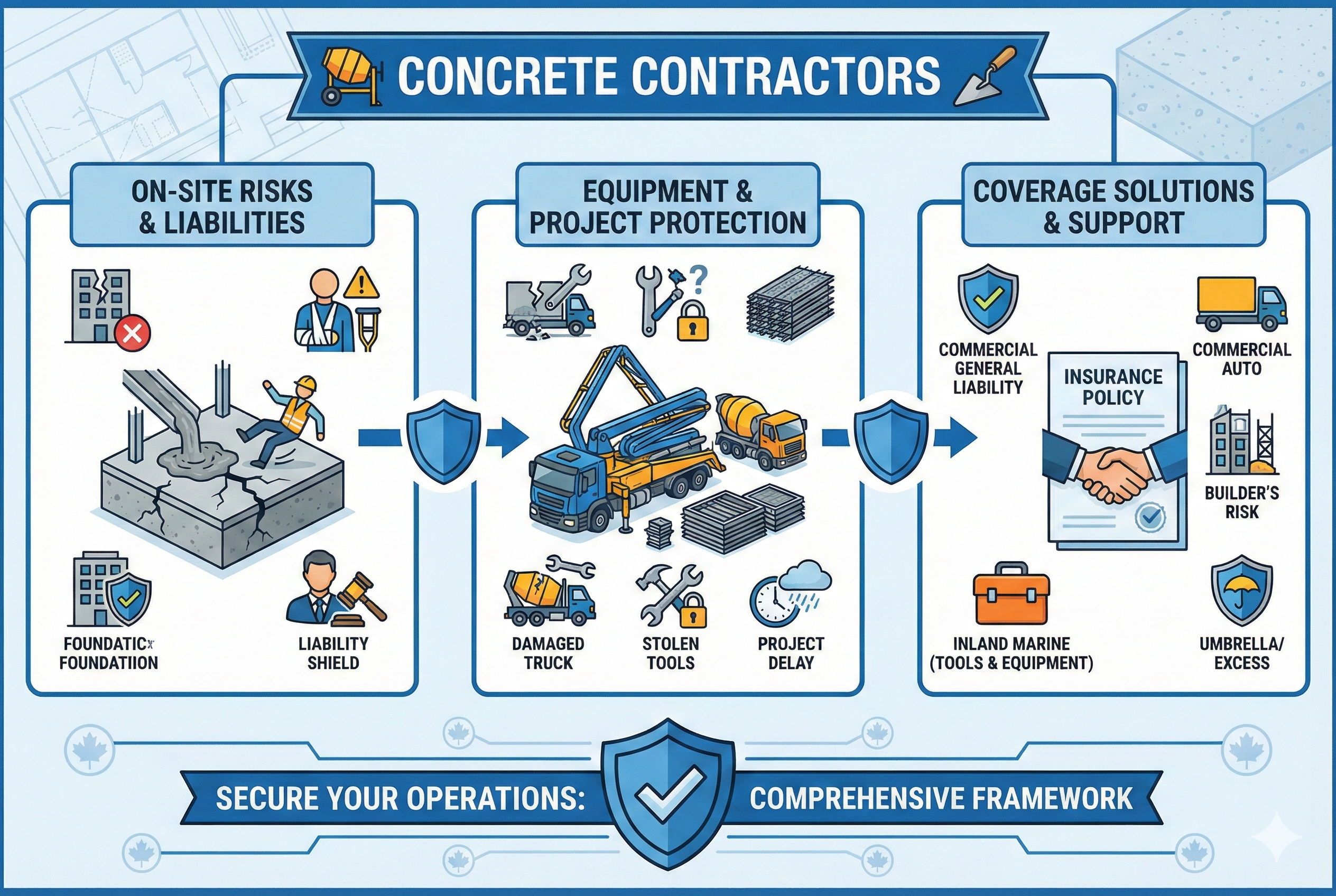
Concrete contractors literally lay the foundation for Canada’s buildings and infrastructure—but their work carries unique structural, environmental, and liability risks. From forming and pouring to finishing and cutting, proper insurance is critical to protect your business.
Key Risks Concrete Contractors Face
Concrete work often involves:
- Structural failure due to improper mix, curing, or placement
- Cracking, spalling, or settlement claims months later
- Injury to workers or the public on active sites
- Damage to neighbouring property or underground utilities
- Silica dust exposure and environmental concerns
Claims may arise long after the pour is complete.
Essential Insurance Coverages
- Commercial General Liability (CGL) – Covers third-party injury and property damage
- Contractors Professional Liability (E&O) – Protects against workmanship or specification errors
- Completed Operations Coverage – Critical for delayed defect claims
- Contractor’s Equipment Insurance – Covers mixers, pumps, saws, and forms
- Commercial Auto Insurance – Required for trucks and mixers
- WSIB / Workers’ Compensation – Mandatory employee protection
- Umbrella Liability – Extra limits for high-severity claims
Risk Management Tips
- Follow CSA and building code standards
- Document mix designs, curing times, and inspections
- Use written contracts with clear scopes of work
- Train crews on silica dust safety
Final Thought
Concrete may harden—but insurance mistakes don’t fade. With the right Canadian insurance program, concrete contractors can protect their projects, reputation, and future growth. 🇨🇦
Brokers can contact Total Risk Managers to discuss a risk.
This article is general information for insurance brokers. It is not advice, and it is not a quote or an offer of coverage. Policy wording decides what is covered. Coverage is arranged through a licensed insurance broker.