Mold Remediation Contractors: Insurance Essentials in Canada
Asbestos Abatement Contractors: Insurance Essentials in Canada
March 21, 2026
Hazardous Waste Hauling: Insurance Essentials in Canada
March 24, 2026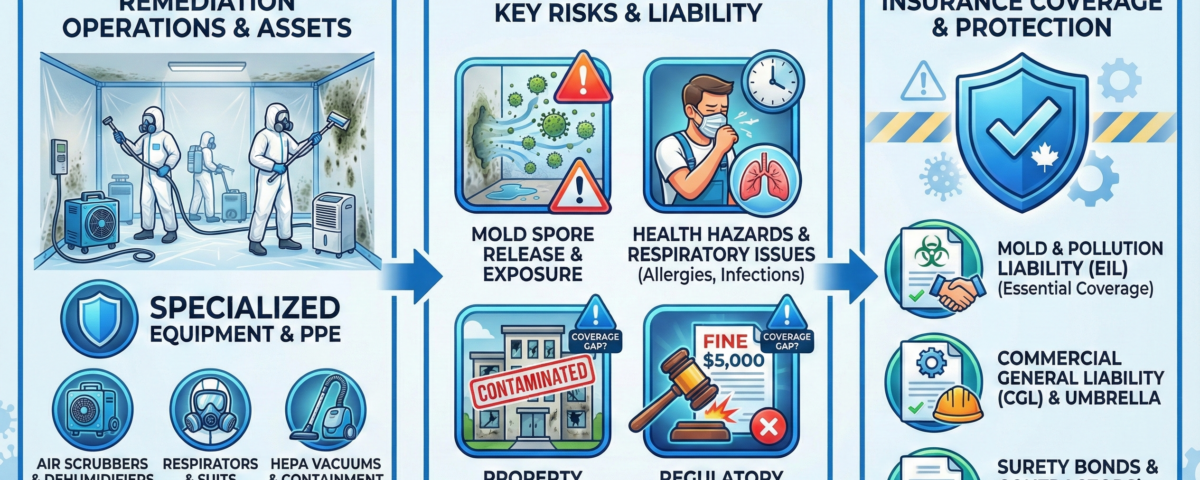
Mold remediation contractors are often called in during emergency situations—after floods, leaks, or long-term moisture issues. While the work is essential, exposure to mold and contaminated environments creates significant liability and health risks that demand specialized insurance.
Key Risks Mold Remediation Contractors Face
Mold remediation commonly involves:
- Exposure to toxic or allergenic mold spores
- Bodily injury or respiratory claims from workers or occupants
- Property damage if remediation is incomplete or incorrect
- Cross-contamination of unaffected areas
- Long-tail health claims that surface months or years later
Essential Insurance Coverages
- Contractors Pollution Liability (CPL) – Core coverage for mold and microbial contamination
- Commercial General Liability (CGL) – Covers third-party injury and property damage
- Professional Liability (E&O) – Protects against errors in assessment or remediation methods
- Contractor’s Equipment Insurance – Covers air scrubbers, dehumidifiers, and tools
- Commercial Auto Insurance – For service vehicles
- WSIB / Workers’ Compensation – Mandatory for employee protection
- Umbrella Liability – Extra protection for severe or long-term claims
Risk Management Tips
- Follow IICRC and industry remediation standards
- Use proper containment and air filtration systems
- Document moisture readings, testing, and clearance reports
- Ensure staff training and certification
Final Thought
Mold remediation contractors operate where health and property risks intersect. The right Canadian insurance program helps protect your workers, clients, and reputation—long after the job is done. 🇨🇦
Brokers can contact Total Risk Managers to discuss a risk.
This article is general information for insurance brokers. It is not advice, and it is not a quote or an offer of coverage. Policy wording decides what is covered. Coverage is arranged through a licensed insurance broker.