Rooming Houses: Insurance Essentials for Canadian Property Owners
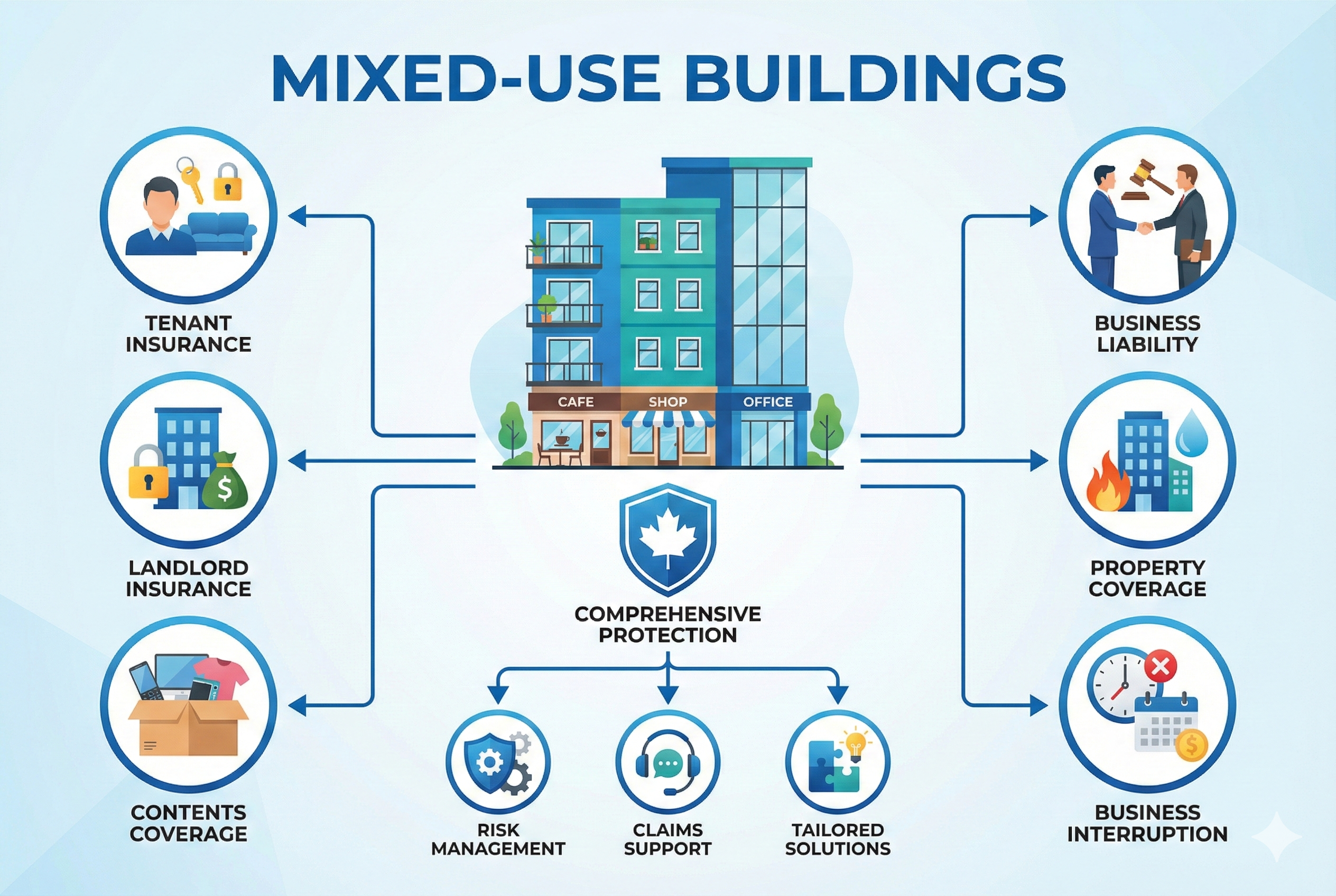
Mixed-Use Buildings: Insurance Considerations for Canadian Property Owners
December 9, 2025
Care Homes & Assisted Living Homes: Insurance Essentials for Canadian Providers
December 11, 2025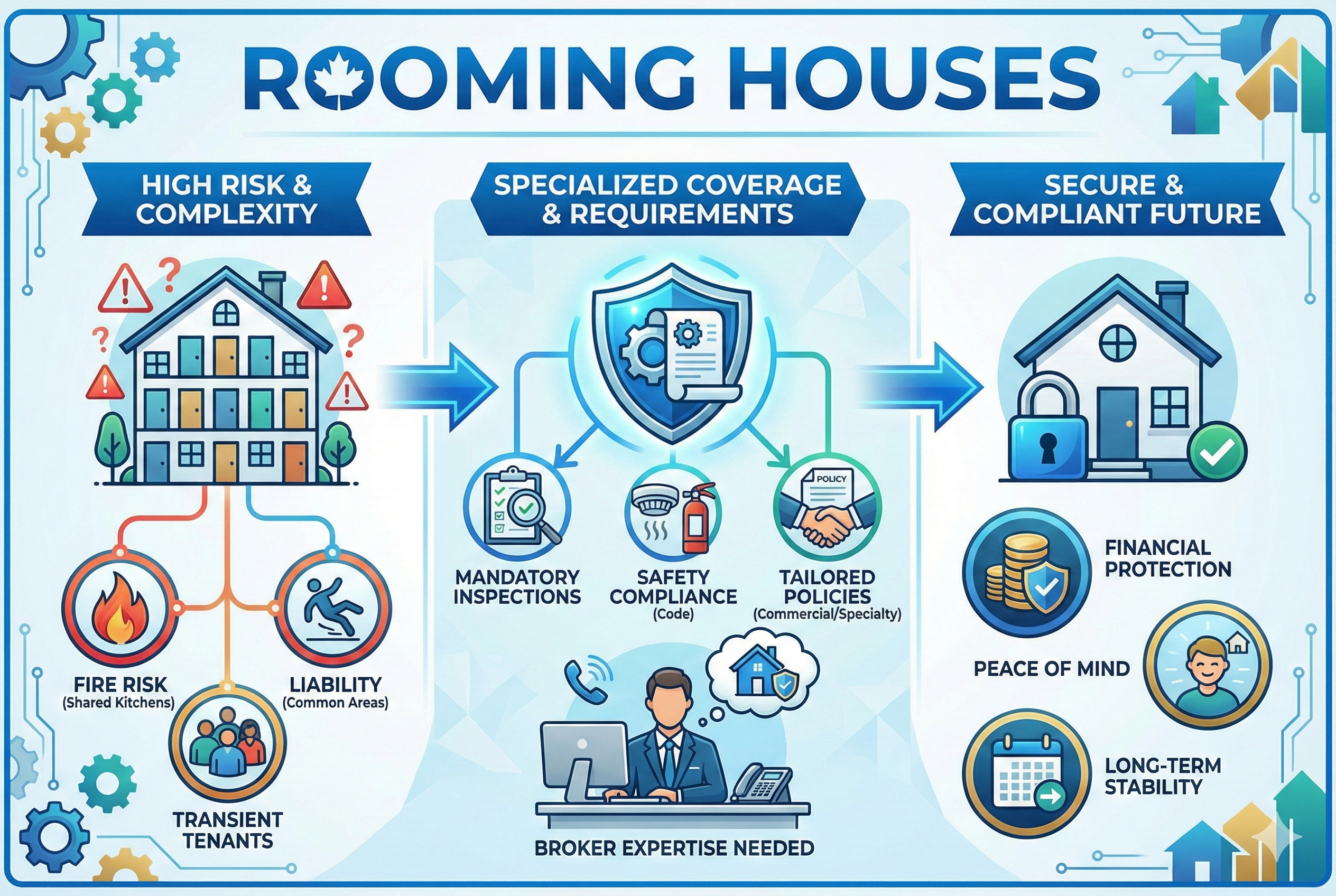
Rooming houses play an important role in providing affordable housing across Canada, offering individual rooms for rent within a shared building. While they serve a valuable purpose, insuring them presents unique challenges. Here’s what property owners need to know to properly protect their rooming house. 🛡️
🔹 Risks of Rooming Houses
• Property Damage 💥
With multiple tenants living in close proximity, the risk of issues such as water leaks, fire hazards, and vandalism increases.
• Liability Risks ⚖️
Shared kitchens, hallways, and other common areas can become sites of accidents, potentially leading to liability claims.
• Tenant Issues 🗣️
Disputes over noise or shared spaces—and complications related to late payments—can escalate into legal concerns or property damage.
🔹 Insurance Considerations for Rooming Houses
• Property and Liability Coverage 📝
Your policy should address structural damage, liability exposure, and loss of rental income caused by insured events.
• Tenant’s Insurance 🏠
Encouraging tenants to carry renters insurance helps ensure their belongings are protected and may reduce your liability if they cause damage.
• Building and Contents Coverage 🏚️
Confirm that your insurance includes both building coverage for structural repairs and contents coverage for any furnishings or appliances you provide.
🔹 Tips for Protecting Your Rooming House
• Install Security Features 🔒
Secure locks, surveillance cameras, and good lighting can deter theft and enhance tenant safety.
• Regular Inspections 🛠️
Routine checks of private rooms and common areas help identify maintenance needs before they turn into larger problems.
• Tenant Screening 👀
Careful screening can reduce potential conflicts and help maintain a safe, stable living environment.
🔹 Final Thoughts
Rooming houses offer meaningful housing solutions but require thoughtful insurance planning. With the right coverage in place, you can protect your property and support a safe, reliable home for your tenants. 🏡💡
#RoomingHouses #PropertyInsurance #AffordableHousing #CanadaInsurance #RealEstateInvesting #LandlordTips #RiskManagement #TenantProtection