Student Housing Rentals: Insurance Tips for Canadian Landlords and Tenants

High-Value Commercial Property Insurance: Protecting Assets Over $10M in Canada
December 4, 2025
Short-Term Rentals (Airbnb/VRBO): Insurance Tips for Canadian Hosts
December 6, 2025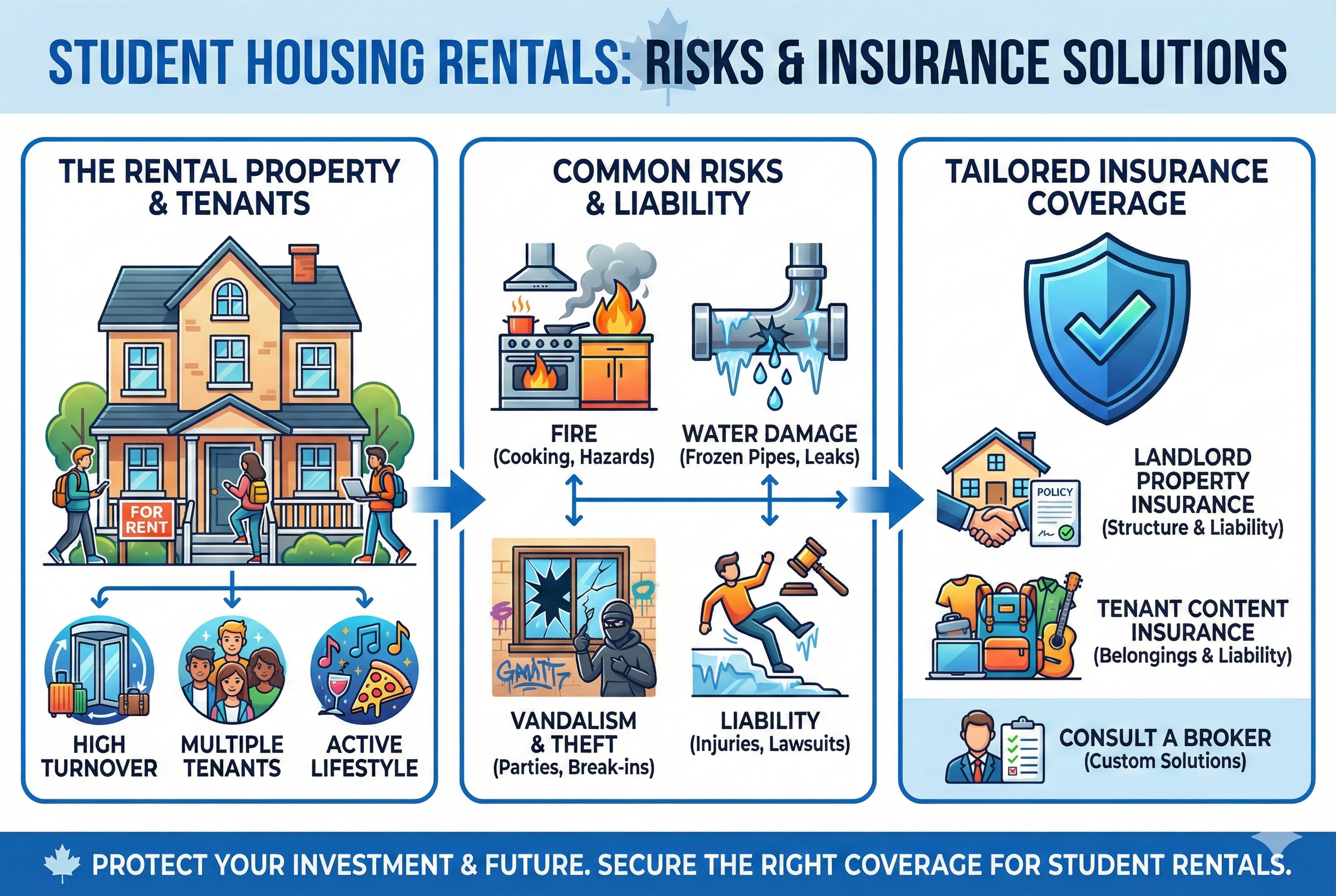
Student housing rentals in Canada are a popular investment opportunity, but they come with unique insurance needs. Whether you’re a landlord renting to students or a tenant, understanding the insurance requirements can help you avoid financial risks. Here’s everything you need to know about insuring student housing. 🛡️
🔹 Risks of Student Housing Rentals
- Property Damage 💥: Students may unintentionally cause damage to the property, such as broken windows, water damage, or fire hazards from cooking accidents.
- Vandalism & Theft 🖤: With frequent tenant turnover, there’s a higher risk of vandalism or theft, especially if security measures aren’t in place.
- Liability Concerns ⚖️: If a student gets injured while on the property, landlords may be liable for medical expenses and legal costs.
🔹 Insurance Considerations for Landlords
- Landlord Insurance 🏠: Landlords should have property insurance that covers building damage, theft, vandalism, and liability claims. This ensures you’re protected if something goes wrong during the tenancy.
- Renters Insurance for Tenants 📝: It’s highly recommended that tenants have their own renters insurance to protect their personal belongings and cover liability in case of accidents.
🔹 Tips for Protecting Your Student Housing Property
- Screen Tenants Carefully 👀: Vet your tenants thoroughly to reduce risks associated with damage and late rent payments.
- Install Security Measures 🔒: Install locks, cameras, and alarms to safeguard the property and deter theft.
- Clear Communication 💬: Set clear expectations with tenants about maintenance, property care, and insurance responsibilities to prevent misunderstandings.
🔹 Final Thoughts
Student housing rentals can be a profitable investment when insured correctly. By protecting both the property and tenants, you can ensure peace of mind for all parties involved. 🎓🏡
#StudentHousing #RentalInsurance #CanadaInsurance #PropertyManagement #LandlordTips #RentersInsurance #StudentRentals #InsuranceProtection