Tiny Homes: Insurance Essentials for Canadian Owners
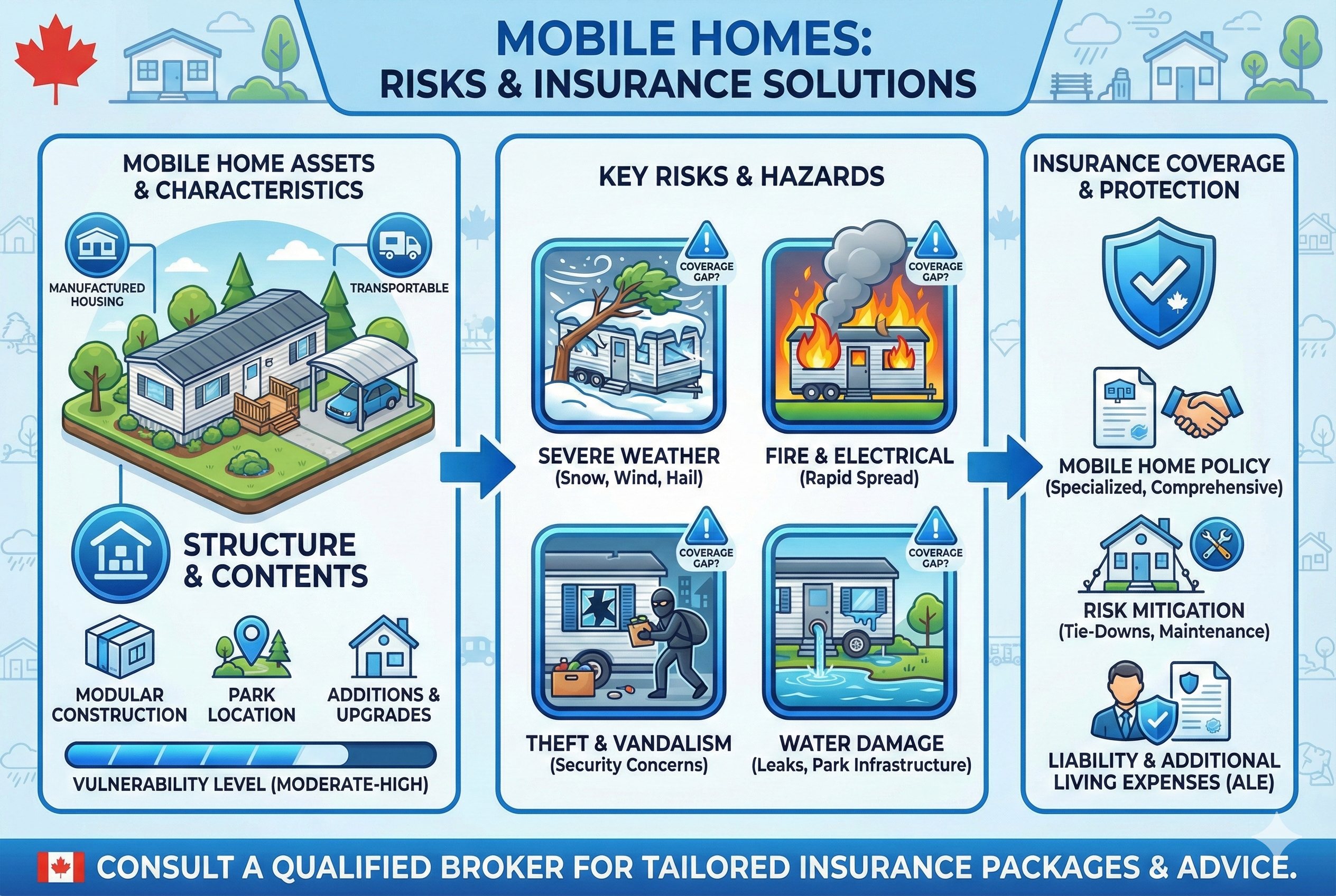
Mobile Homes: Insurance Essentials for Canadian Owners
March 3, 2026
Park Model RV Homes: Insurance Essentials for Canadian Owners
March 5, 2026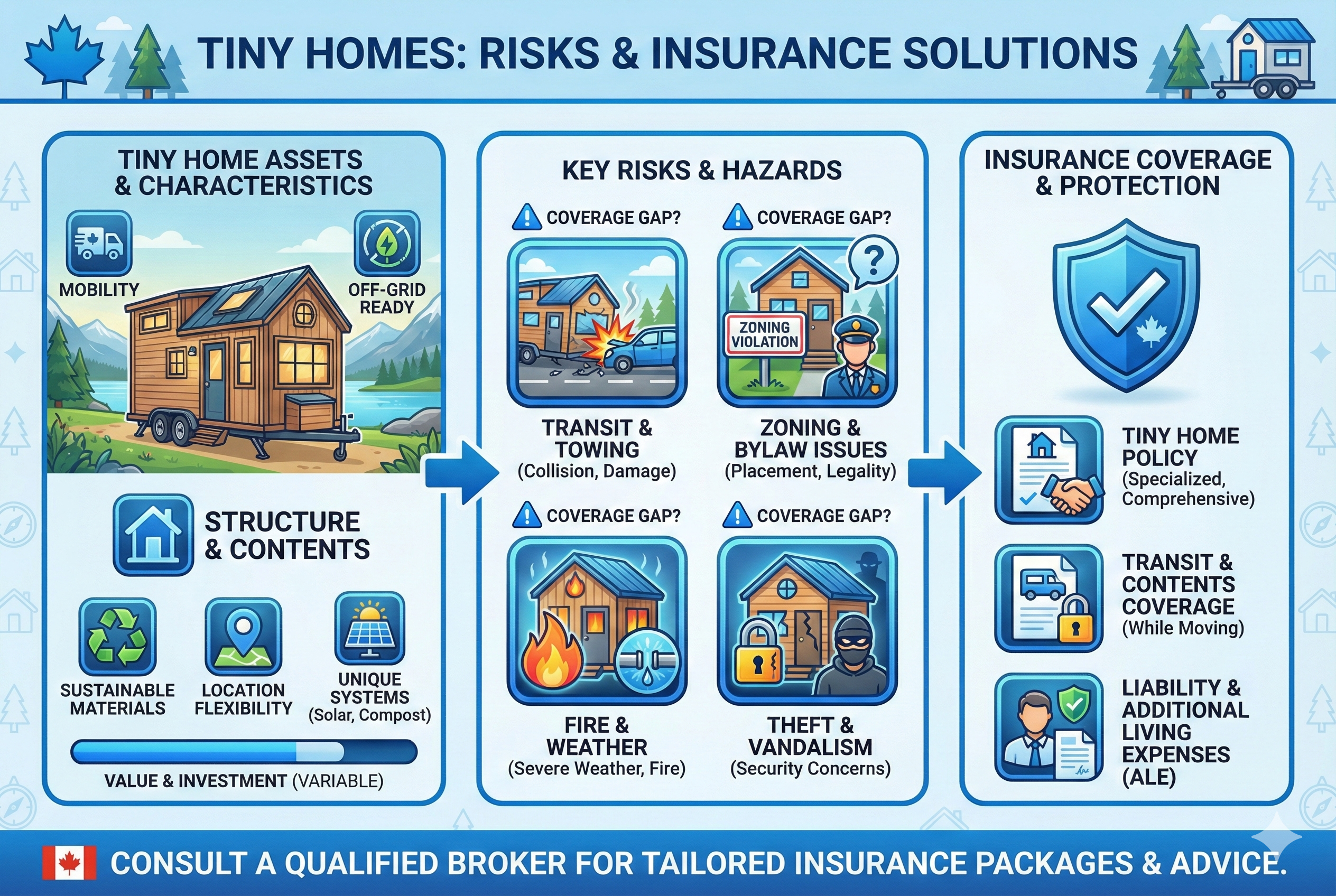
Tiny homes are growing in popularity across Canada—offering affordability, mobility, and a minimalist lifestyle. But when it comes to insurance, tiny homes don’t always fit neatly into standard categories. 🛡️
Why Tiny Homes Are Unique to Insure
Tiny homes may be:
- Built on wheels or permanent foundations 🚚🏗️
- Custom or DIY constructions 🛠️
- Located in rural or non-traditional settings 🌲
- Used seasonally or as secondary residences 🚪
These factors affect how insurers classify and insure them.
Key Insurance Options
- Tiny Home on Foundation – Often insured as a small dwelling 🏠
- Tiny Home on Wheels – May require RV or specialty coverage 🚐
- Property & Contents Coverage – Protects the structure and belongings 📦
- Liability Insurance – Covers injuries to visitors ⚖️
- Transit Coverage – Essential if the home is moved 🚛
Common Risks to Address
- Fire risk from compact layouts and heating sources 🔥
- Water damage from plumbing in tight spaces 💧
- Theft or vandalism in remote locations 🕵️♂️
- Zoning or bylaw compliance issues 📋
Risk Management Tips
- Disclose full details of construction and use 📣
- Install smoke alarms and fire extinguishers 🚨🧯
- Secure the home when unoccupied 🔒
- Work with a broker experienced in alternative housing 🤝
Final Thought
Tiny homes may be small—but the risks aren’t. With tailored insurance and expert advice, Canadian tiny-home owners can protect their lifestyle with confidence. 🇨🇦✨
#TinyHomes #TinyHomeInsurance #AlternativeHousing #HomeInsuranceCanada #RiskManagement #CanadianHomeowners #MinimalistLiving #InsuranceTips