Non-Standard Construction: Insurance Considerations for Unique Canadian Homes
Heritage Buildings: Insurance Challenges and Protection Tips for Canadian Property Owners
December 2, 2025
High-Value Commercial Property Insurance: Protecting Assets Over $10M in Canada
December 4, 2025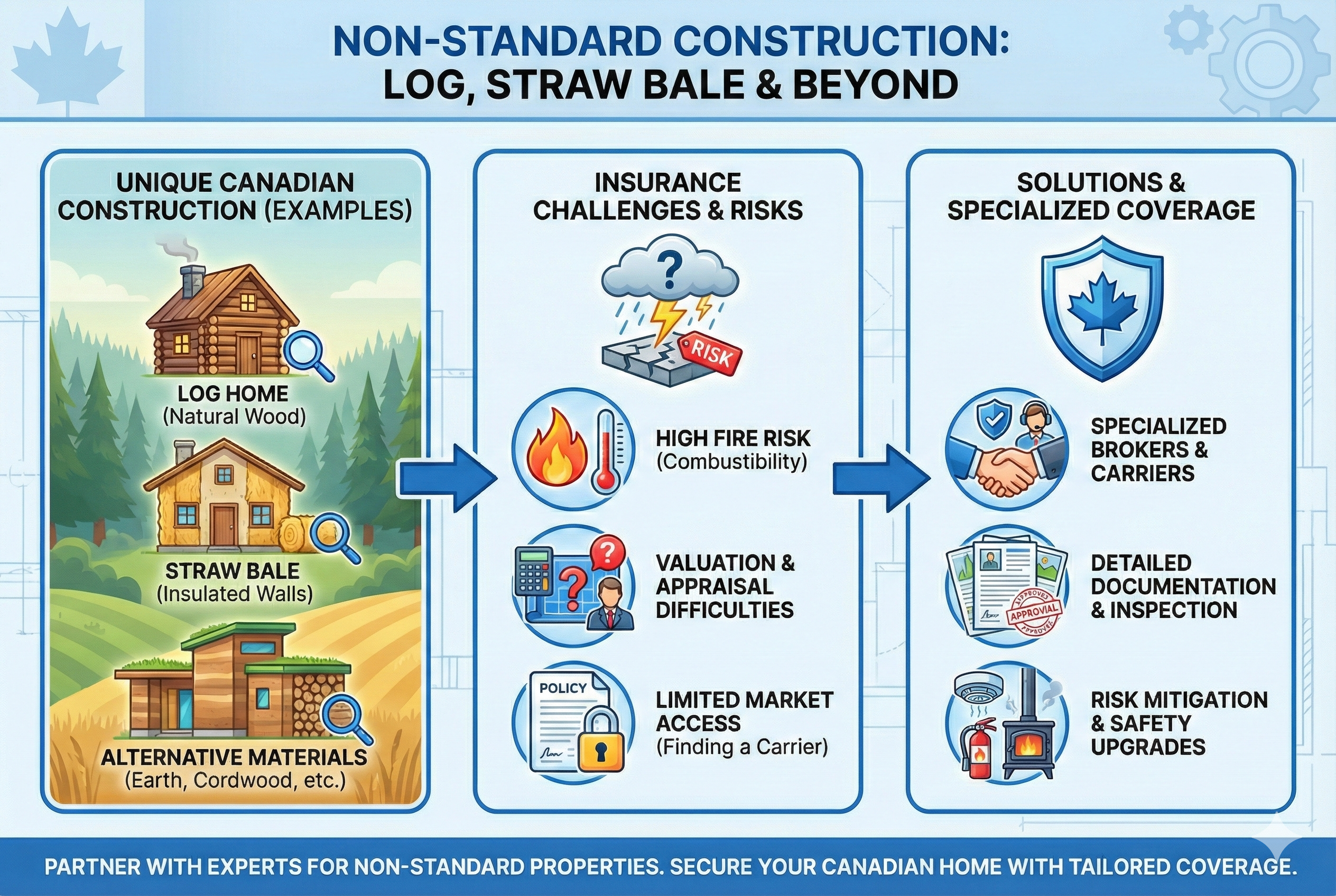
In Canada, non-standard construction homes—such as log cabins, straw bale homes, and earth-sheltered buildings—are growing in popularity. While these homes are eco-friendly and unique, they come with special insurance considerations. Here’s what you need to know to protect your unconventional property.
What is Non-Standard Construction?
Non-standard construction refers to homes built with materials or methods that differ from traditional wood framing. Examples include:
- Log Homes: Constructed using whole logs as the main building material.
- Straw Bale Homes: Built using straw bales as insulation, offering energy efficiency and sustainability.
- Earth-Sheltered Homes: Homes built partially or fully underground to reduce energy consumption and blend into the landscape.
Insurance Risks for Non-Standard Homes
- Higher Risk of Fire: Materials like straw bales and logs are more combustible than traditional building materials, increasing fire risk.
- Difficulties in Valuation: Non-standard materials may be harder to value and appraise, making it challenging to determine appropriate coverage amounts.
- Limited Coverage Options: Many insurers may hesitate to provide standard coverage for these unconventional homes. You may need specialized insurance designed for non-traditional structures.
Insurance Considerations for Unique Homes
- Specialized Coverage: Consider a policy that specifically covers non-standard homes, ensuring protection for fire, weather damage, and material-specific risks.
- Rebuild Costs: Ensure your policy includes full rebuild cost coverage, as the cost to rebuild with non-standard materials can be higher than traditional methods.
- Regular Inspections: Insurance providers may require periodic inspections to assess the condition of the unique construction and identify any risks early on.
Final Thoughts
Owning a non-standard home in Canada is a rewarding experience, but it’s crucial to have the right insurance to ensure your property is protected. Choose a policy that fits your home’s unique needs and gives you peace of mind.
Brokers can contact Total Risk Managers to discuss a risk.
This article is general information for insurance brokers. It is not advice, and it is not a quote or an offer of coverage. Policy wording decides what is covered. Coverage is arranged through a licensed insurance broker.