Short-Term Rentals (Airbnb/VRBO): Insurance Tips for Canadian Hosts
Student Housing Rentals: Insurance Tips for Canadian Landlords and Tenants
December 5, 2025
Multi-Family Apartments: Insurance Essentials for Canadian Landlords
December 8, 2025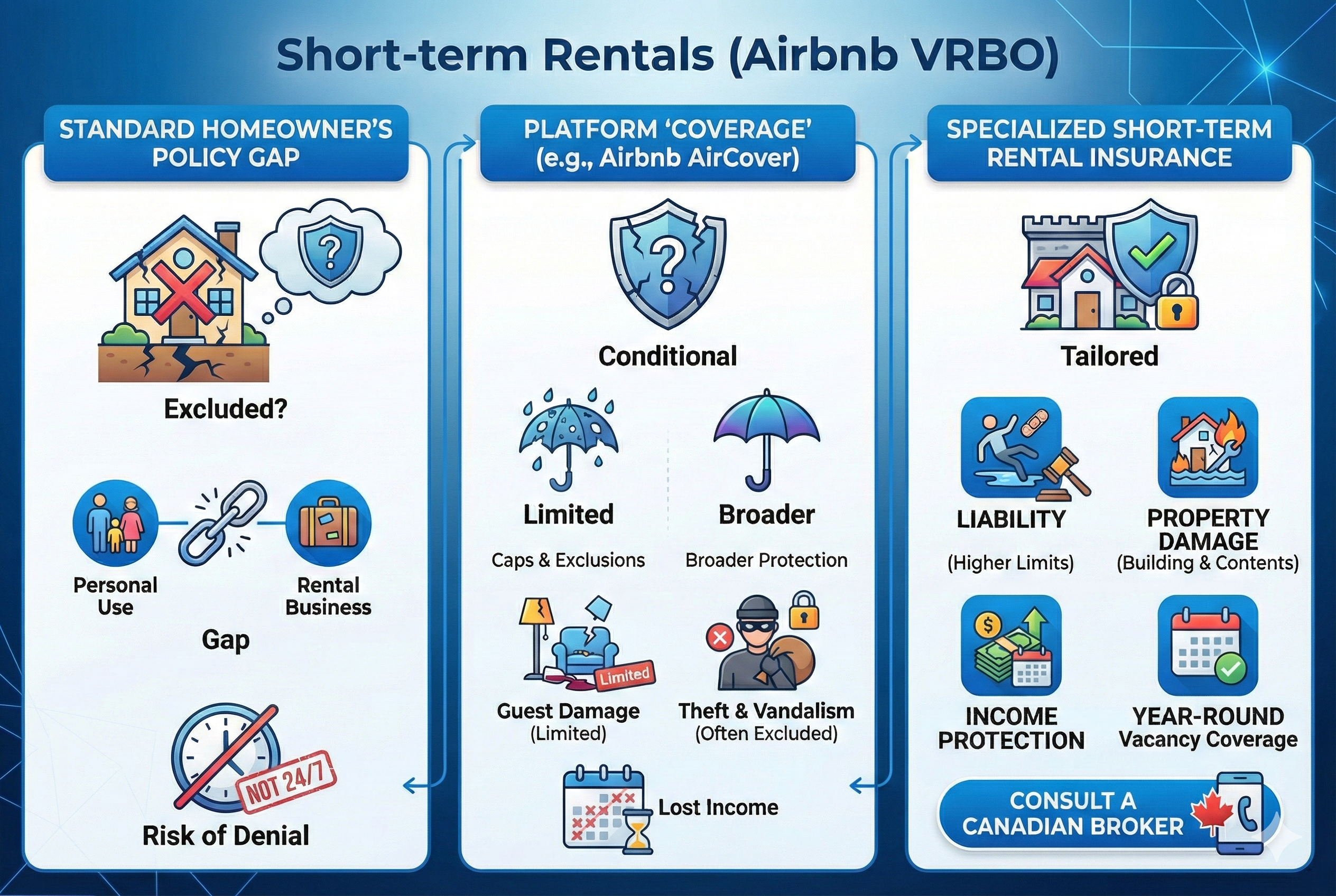
Short-term rentals have created new income opportunities for Canadian homeowners, especially through platforms like Airbnb and VRBO. But with those opportunities come distinct insurance considerations. Whether you host occasionally or manage a dedicated vacation property, it’s crucial to make sure you’re properly protected.
Risks of Short-Term Rentals
• Property Damage
Guests—especially those unfamiliar with your home—may accidentally damage furnishings, appliances, or other parts of the property.
• Theft or Vandalism
Short-term stays sometimes invite less predictable guest behaviour, increasing the risk of theft or intentional damage.
• Liability Risks
If a guest is injured on your property, you could be responsible for medical bills and potential legal expenses.
Insurance Considerations for Short-Term Rentals
• Host Protection Programs
Airbnb, VRBO, and similar platforms offer host protection programs, but these policies have limits. Review them carefully to understand what’s covered—and what isn’t.
• Homeowners Insurance
Standard homeowners policies often exclude short-term rental activity. You may need added coverage or a specific endorsement to protect against rental-related risks.
• Commercial Insurance
If you rent frequently or treat hosting as a business, commercial insurance designed for short-term rentals can provide broader coverage for both property and income.
Tips for Protecting Your Short-Term Rental
• Review Platform Policies
Familiarize yourself with your platform’s terms and conditions to avoid gaps in coverage or unexpected disputes.
• Screen Guests
A simple vetting process can help reduce the chance of damage or issues during a stay.
• Maintain the Property
Regular inspections and upkeep help prevent accidents, fire hazards, and mechanical failures.
Final Thoughts
Short-term rentals can be a rewarding source of income, but they also come with responsibilities. With the right insurance in place, you can protect your property, safeguard your guests, and host with confidence.
Brokers can contact Total Risk Managers to discuss a risk.
This article is general information for insurance brokers. It is not advice, and it is not a quote or an offer of coverage. Policy wording decides what is covered. Coverage is arranged through a licensed insurance broker.