Multi-Family Apartments: Insurance Essentials for Canadian Landlords
Short-Term Rentals (Airbnb/VRBO): Insurance Tips for Canadian Hosts
December 6, 2025
Mixed-Use Buildings: Insurance Considerations for Canadian Property Owners
December 9, 2025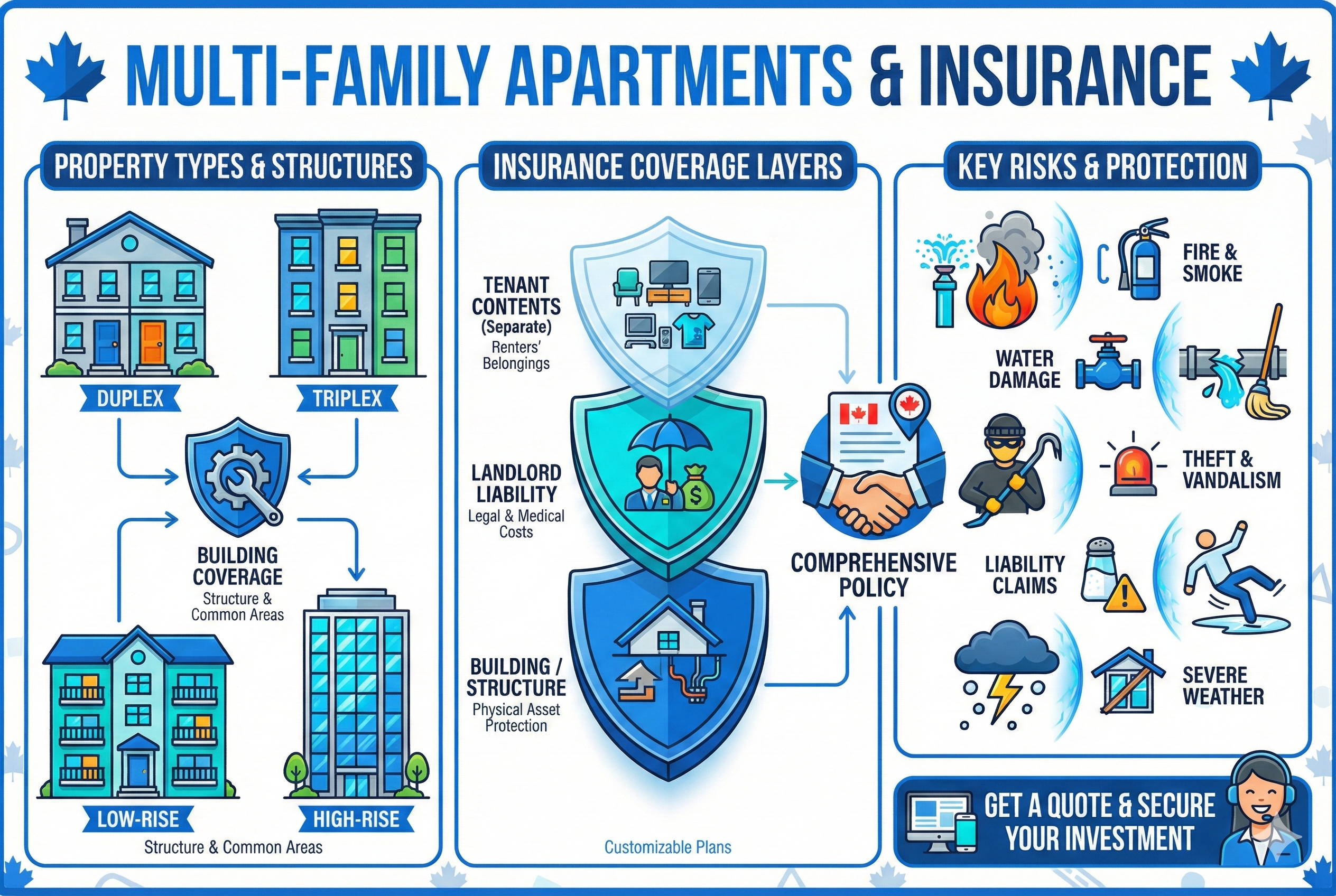
Owning multi-family apartments in Canada can be a rewarding investment, but it also brings distinct insurance considerations. Whether you manage a duplex, triplex, or a larger building, the right coverage is essential to protect both your property and your financial stability. Here’s what to keep in mind when insuring multi-family housing.
Risks of Multi-Family Apartments
• Property Damage
With multiple households under one roof, the potential for fire, water damage, vandalism, and other incidents increases simply because more people share the space.
• Tenant Liability
Tenants can unintentionally cause damage to common areas or neighbouring units, which may result in costly liability claims.
• Business Interruption
Significant damage that forces tenants to move out can disrupt rental income and lead to financial strain.
Insurance Considerations for Multi-Family Apartments
• Landlord Insurance
A landlord policy typically covers the building structure, liability exposure, and certain types of property damage—forming the foundation of protection for both you and your investment.
• Renters Insurance for Tenants
Encouraging tenants to carry renters insurance helps ensure their belongings are covered and can reduce your own liability in the event of a loss.
• Building Replacement Cost
Confirm that your policy includes full replacement cost coverage so the property can be rebuilt to its original standard after a total loss.
Tips for Protecting Your Multi-Family Property
• Regular Maintenance
Routine inspections and preventive maintenance help reduce the likelihood of damage and support a safer environment for tenants.
• Install Security Systems
Security cameras, alarms, and proper lighting can deter theft, vandalism, and unauthorized access.
• Screen Tenants Carefully
Thoughtful screening helps minimize risks tied to property damage, disputes, and payment issues.
Final Thoughts
Multi-family buildings offer strong long-term potential, but they demand comprehensive insurance planning. By safeguarding your property, your tenants, and your revenue, you set the foundation for stability and success.
Brokers can contact Total Risk Managers to discuss a risk.
This article is general information for insurance brokers. It is not advice, and it is not a quote or an offer of coverage. Policy wording decides what is covered. Coverage is arranged through a licensed insurance broker.