Distilleries in Canada: Essential Insurance Protection for High-Risk Craft Producers
Breweries & Wineries in Canada: Key Insurance Protection for Craft Producers
January 6, 2026
Fitness Centers in Canada: Essential Insurance for High-Activity Facilities
January 8, 2026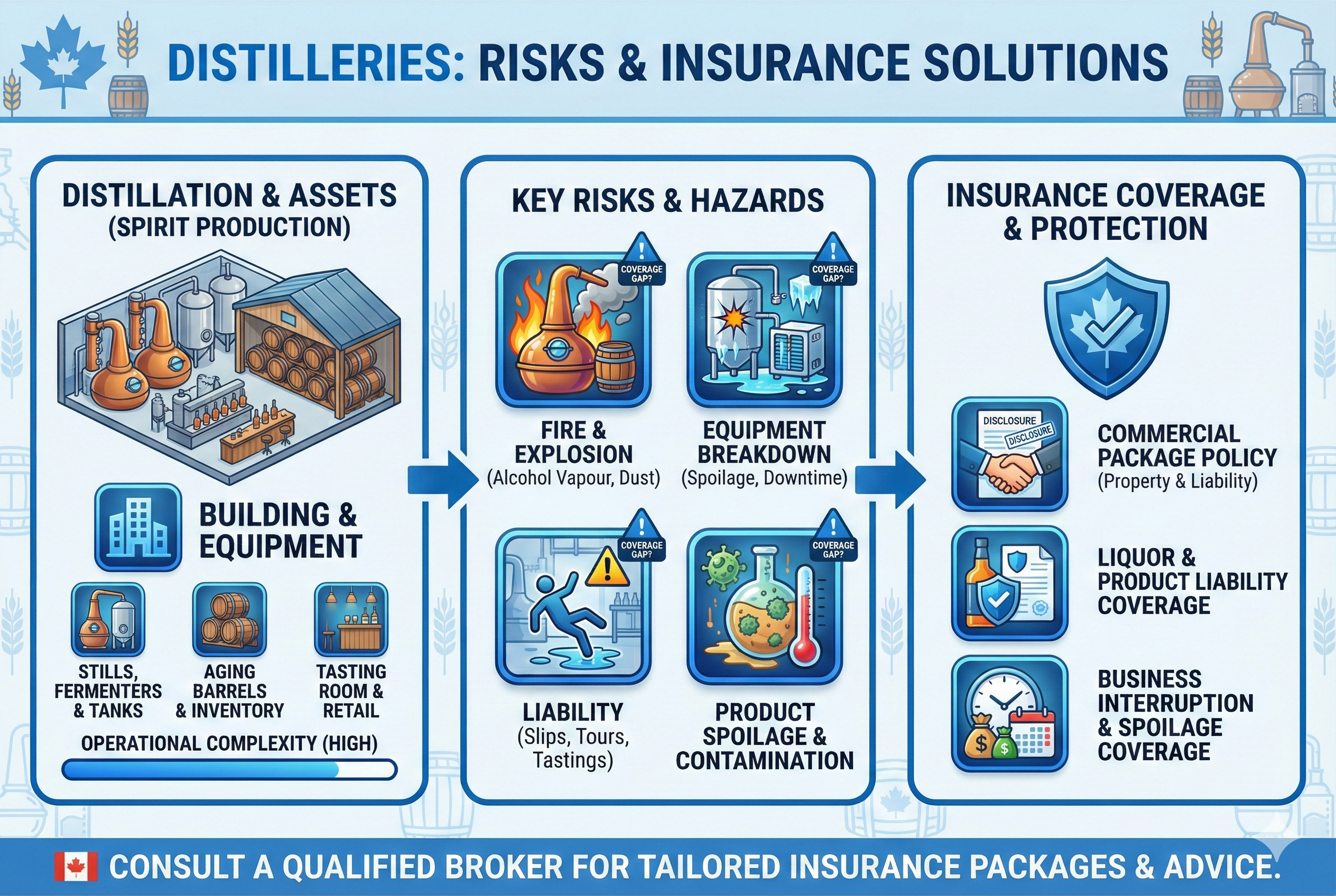
Canada’s craft distilleries are thriving, producing award-winning whisky, gin, vodka, and rum from coast to coast. But distilling is an inherently high-hazard industry, involving flammable liquids, pressurized equipment, and complex production processes. Without proper insurance, a single incident can halt operations and lead to catastrophic losses.
Why Distilleries Face Elevated Risks
Flammable Alcohol Vapours
Ethanol vapours ignite easily, creating a significant fire and explosion hazard—particularly during fermentation, distillation, and bottling.
Equipment Breakdown
Stills, boilers, pumps, condensers, and refrigeration systems are essential and costly. A breakdown can halt production instantly.
Contamination & Batch Loss
Off-flavours, bacterial contamination, or temperature failures can ruin entire batches, resulting in substantial financial loss.
Barrel Storage Risks
Aging rooms store large volumes of alcohol-soaked barrels, intensifying fire severity if an incident occurs.
Tasting Room Liability
Slip-and-fall injuries, intoxication-related incidents, and event risks all contribute to heightened liability exposure.
Essential Insurance Coverages
Commercial Property Insurance – Covers buildings, stills, barrels, bottling lines, and inventory.
Equipment Breakdown – Protects boilers, stills, pumps, automation systems, and refrigeration.
Product Contamination / Spoilage – Covers financial loss from ruined batches.
Liquor Liability – Provides protection against alcohol-related injuries and claims.
Business Interruption Insurance – Replaces income lost during shutdowns.
Stock & Aging Inventory Coverage – Essential for barrel-aged spirits.
Final Thought
Distilling blends science, craftsmanship, and high-risk materials. The right insurance protects your production, your people, and your growing brand.
Brokers can contact Total Risk Managers to discuss a risk.
This article is general information for insurance brokers. It is not advice, and it is not a quote or an offer of coverage. Policy wording decides what is covered. Coverage is arranged through a licensed insurance broker.