Flea Markets in Canada: Why Vendors Need the Right Insurance
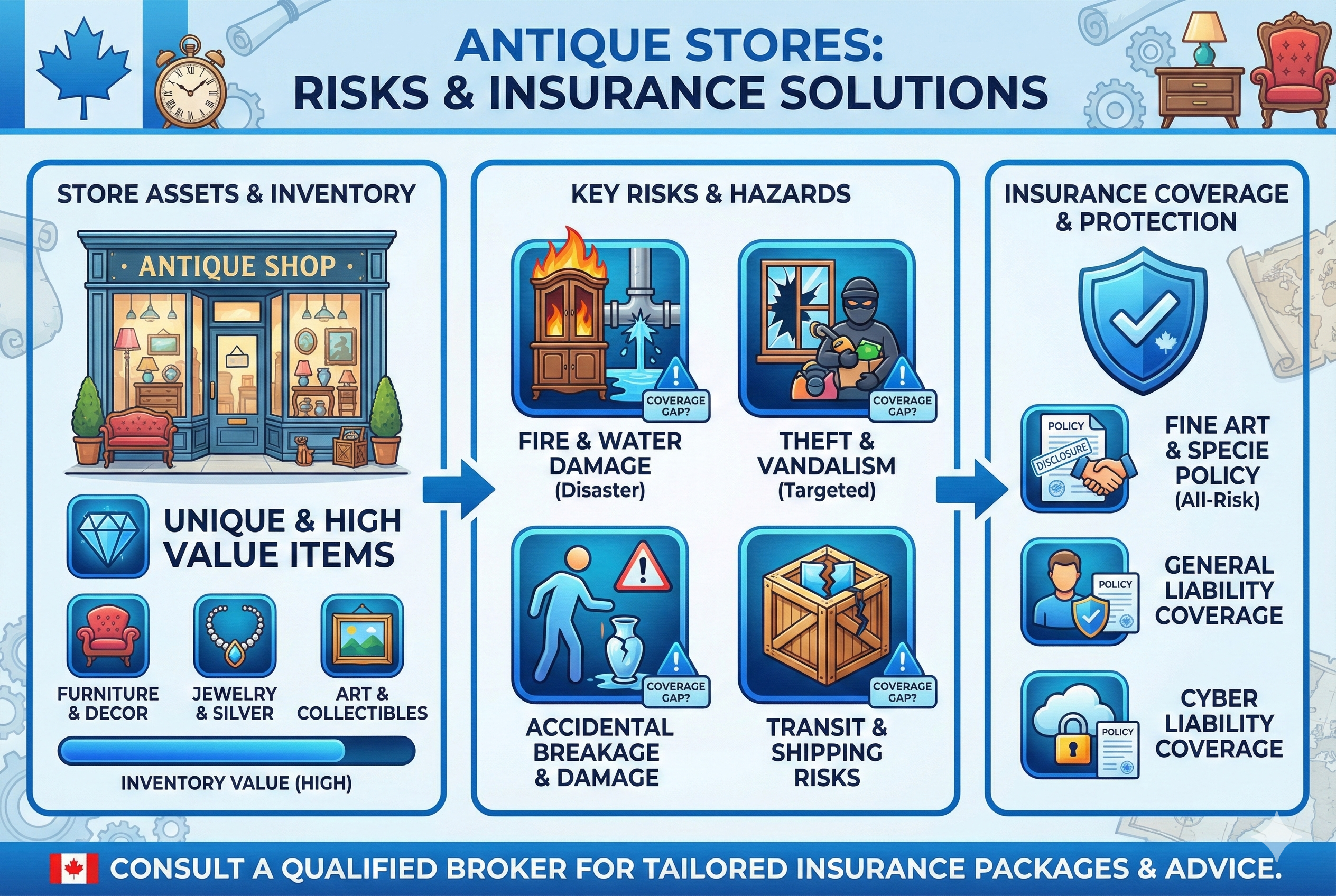
Antique Stores in Canada: Insurance Essentials for High-Value, One-of-a-Kind Inventory
January 16, 2026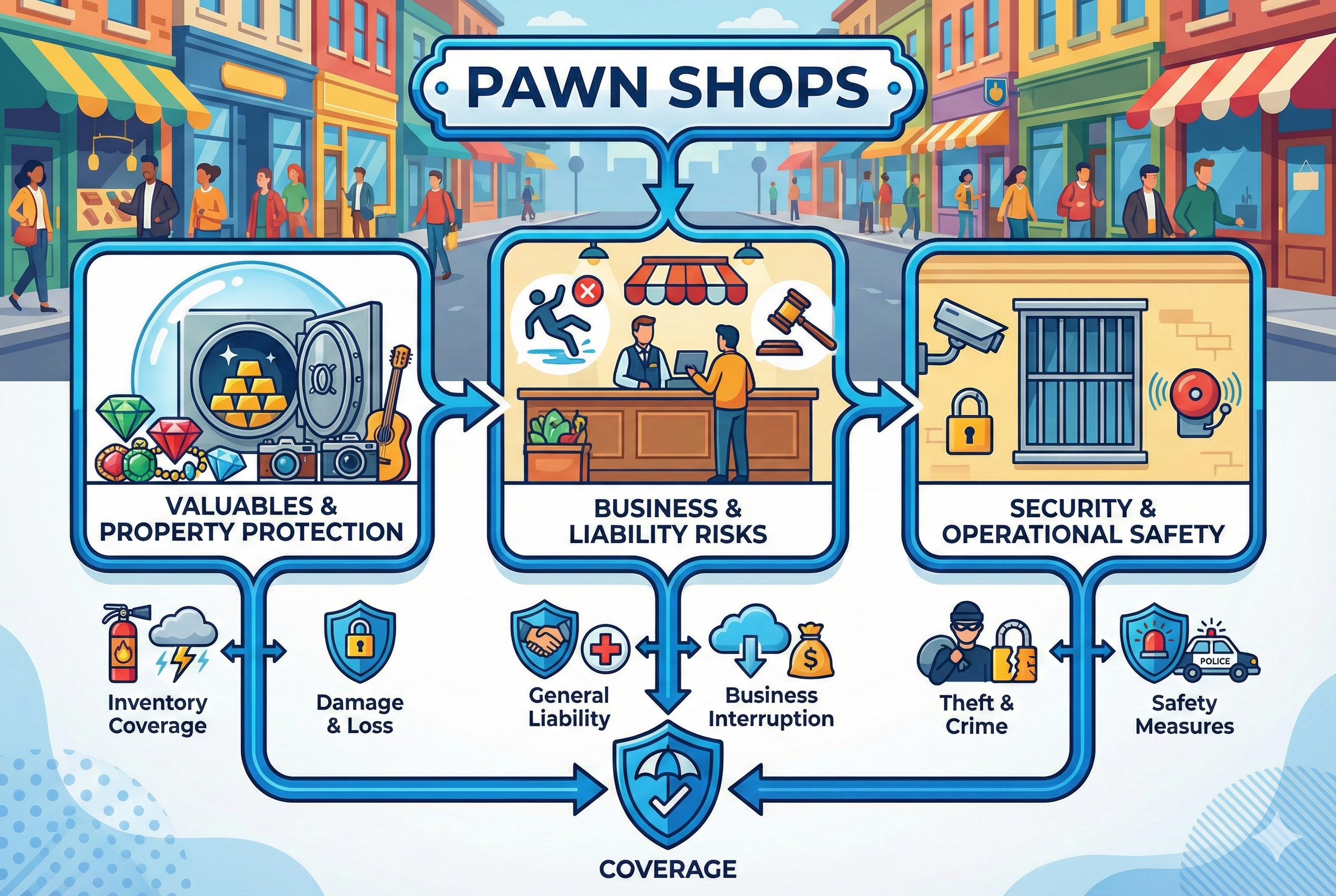
Pawn Shops in Canada: Why Specialized Insurance Is Essential for High-Value Goods
January 19, 2026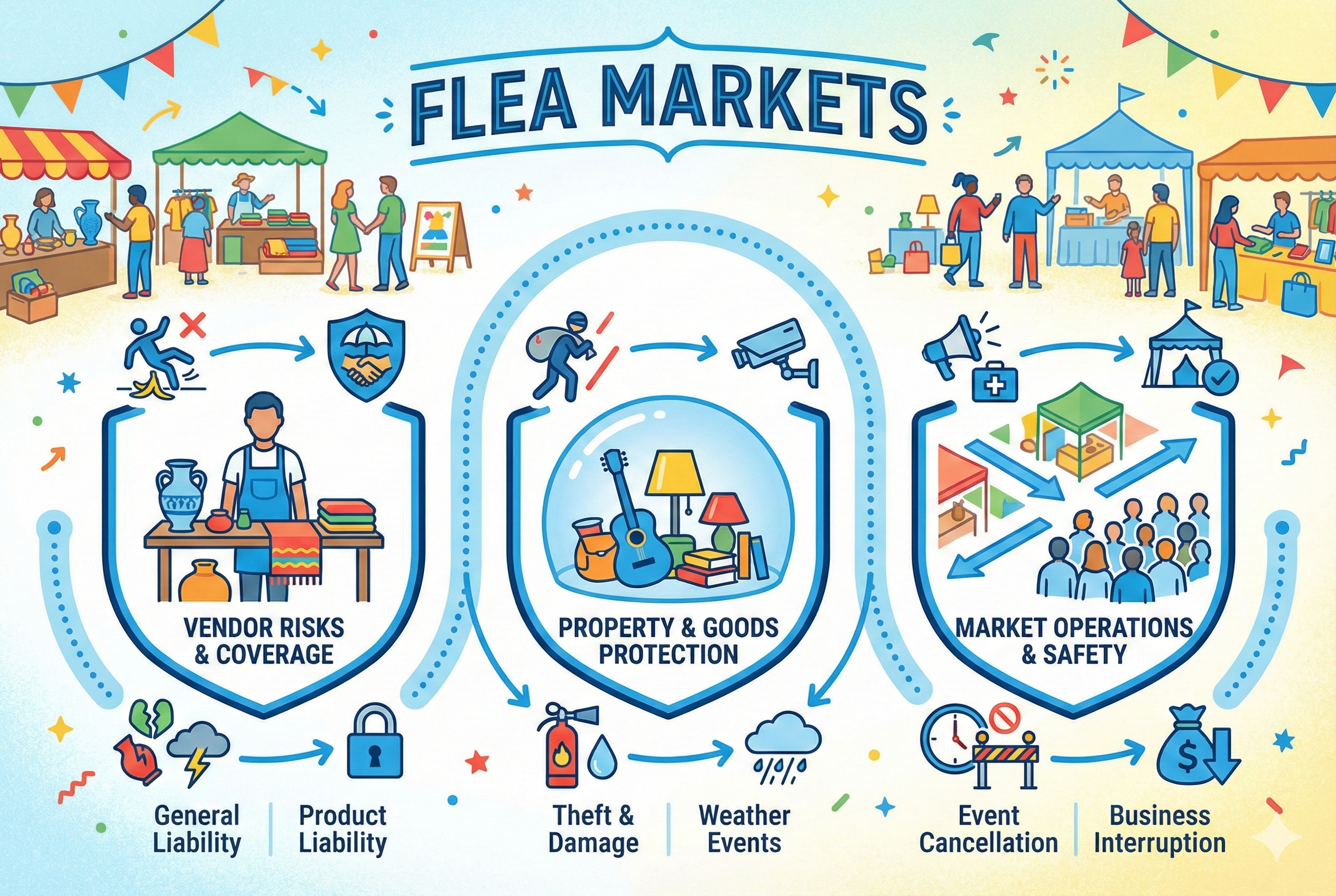
Flea markets across Canada bring communities together with rows of vintage décor, handmade crafts, antiques, collectibles, and local food. But behind the lively atmosphere and treasure hunting lies a world of risk—for vendors, organizers, and property owners alike. From crowded aisles to unpredictable weather, strong insurance protection is essential for safe and confident operations.
Why Flea Markets Face Elevated Risks
High Foot Traffic
Busy indoor and outdoor markets see frequent slip-and-fall injuries.
Vendor Property Damage
Tents, displays, antiques, and handmade goods are vulnerable to wind, accidents, and theft.
Liability for Organizers
Market operators may face claims involving injuries, damaged vendor property, or unsafe setups.
Weather Exposure
Rain, windstorms, and extreme heat can impact products, equipment, and visitor safety.
Essential Insurance Coverage
General Liability Insurance – Protects against customer injuries and third-party claims.
Vendor Property Insurance – Covers damaged or stolen products, tables, displays, and tents.
Event Liability Insurance – Critical for organizers managing multiple vendors and large crowds.
Commercial Auto Insurance – Supports vendors transporting goods between markets.
Final Thought
Flea markets thrive on creativity and community—but safeguarding people, products, and spaces is essential. With the right insurance, Canadian vendors and organizers can focus on what they do best: creating memorable market experiences.
Brokers can contact Total Risk Managers to discuss a risk.
This article is general information for insurance brokers. It is not advice, and it is not a quote or an offer of coverage. Policy wording decides what is covered. Coverage is arranged through a licensed insurance broker.