Electrical Contractors: Insurance Essentials in Canada
Plumbing Contractors: Insurance Essentials in Canada
March 14, 2026
Excavation Contractors: Insurance Essentials in Canada
March 17, 2026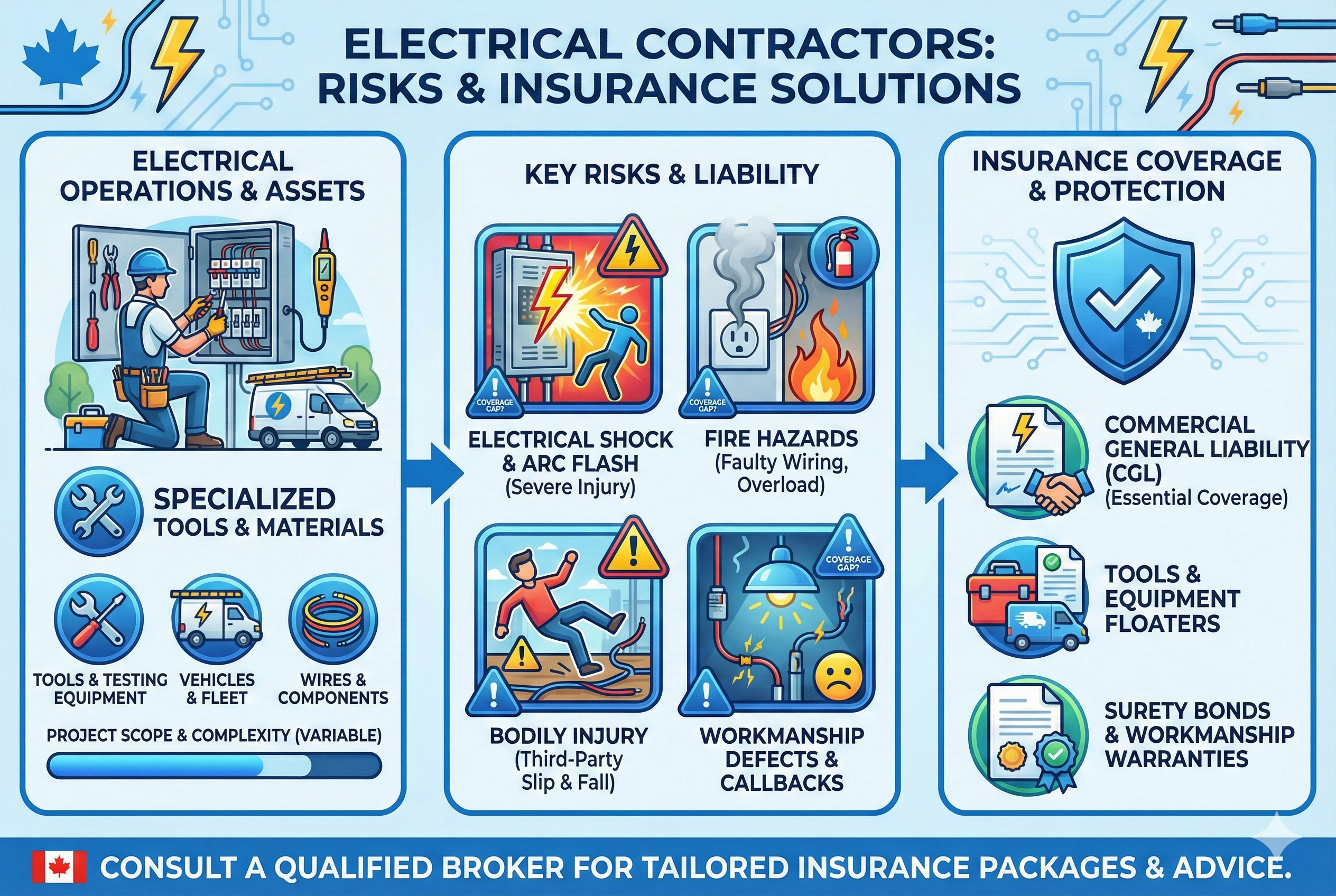
Electrical contractors keep Canada powered—but working with live systems, high voltages, and complex installations brings serious risk. A single wiring error can cause fires, outages, injuries, or costly liability claims. Proper insurance is critical to staying protected.
Key Risks Electrical Contractors Face
Electrical work commonly involves:
- Fire or explosion from faulty wiring
- Electrical shock or serious injury
- Damage to buildings, equipment, or neighbouring properties
- Business interruption caused by power failures
- Claims related to code violations or improper installation
These risks make electricians one of the most closely underwritten trades in Canada.
Essential Insurance Coverages
- Commercial General Liability (CGL) – Covers third-party injury and property damage
- Contractors Professional Liability (E&O) – Protects against installation or design errors
- Tools & Equipment Insurance – Covers theft or damage to tools
- Commercial Auto Insurance – Required for service vans and trucks
- Builder’s Risk – Needed when working on major construction projects
- WSIB / Workers’ Compensation – Mandatory for employee protection
Risk Management Tips
- Follow CSA and electrical code standards strictly
- Use written contracts and detailed scopes of work
- Document inspections, permits, and testing
- Verify subcontractor insurance
Final Thought
Electrical contractors work where risks are high—but so are expectations. With the right Canadian insurance program, you protect your crew, clients, and business from costly setbacks. 🇨🇦
Brokers can contact Total Risk Managers to discuss a risk.
This article is general information for insurance brokers. It is not advice, and it is not a quote or an offer of coverage. Policy wording decides what is covered. Coverage is arranged through a licensed insurance broker.