Tattoo Shops: Insurance Essentials in Canada
Beauty Salons & Estheticians: Insurance Essentials in Canada
April 20, 2026
Body Piercing Studios: Insurance Essentials in Canada
April 22, 2026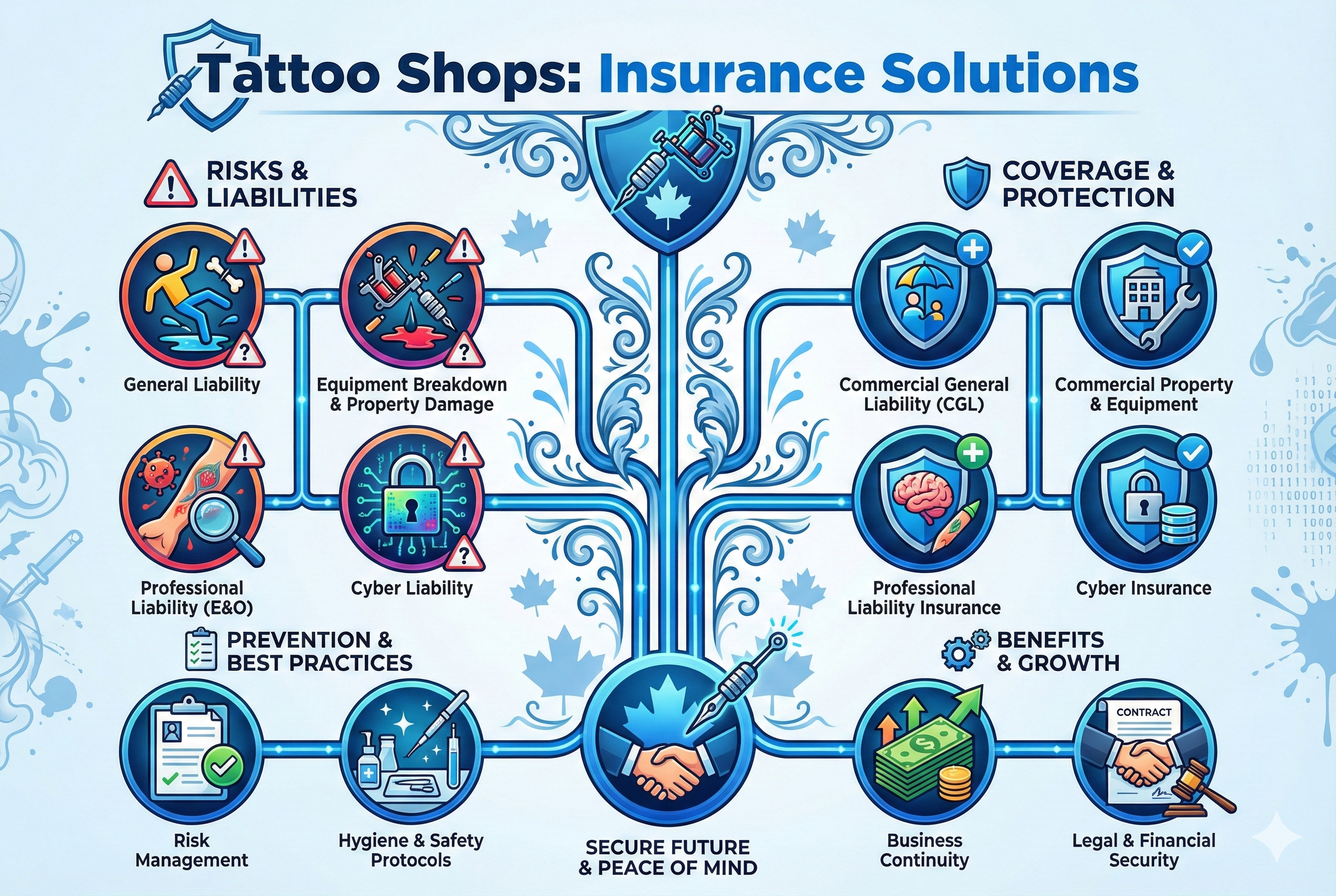
Tattoo shops are creative spaces—but they’re also hands-on, high-liability businesses. From needles and ink to permanent body art, even a small mistake can lead to serious health claims. That’s why proper insurance is critical for tattoo studios and artists across Canada.
Key Risks Tattoo Shops Face
Tattoo operations commonly involve:
- Infection or allergic reaction claims
- Improper sterilization or cross-contamination
- Scarring, dissatisfaction, or design disputes
- Slip-and-fall injuries in studios
- Equipment damage or theft
Because tattoos are permanent, claims may arise long after the session.
Essential Insurance Coverages
- Commercial General Liability (CGL) – Covers bodily injury and property damage
- Professional Liability (Tattoo Malpractice) – Core coverage for service-related claims
- Product Liability – For inks, aftercare products, and merchandise
- Property Insurance – Covers machines, chairs, and furnishings
- Equipment Coverage – Tattoo machines and sterilization tools
- WSIB / Employer’s Liability – Required if employing artists
Risk Management Tips
- Use written consent and medical disclosure forms
- Follow strict sterilization and health protocols
- Maintain training and bloodborne pathogen certification
- Document designs, approvals, and procedures
Final Thought
Tattooing is permanent—but insurance mistakes don’t have to be. With the right Canadian coverage, tattoo shops can focus on artistry while staying protected from costly claims. 🇨🇦
Brokers can contact Total Risk Managers to discuss a risk.
This article is general information for insurance brokers. It is not advice, and it is not a quote or an offer of coverage. Policy wording decides what is covered. Coverage is arranged through a licensed insurance broker.