Commercial Kitchens with Poor Fire Suppression: A Major Insurance Risk in Canada
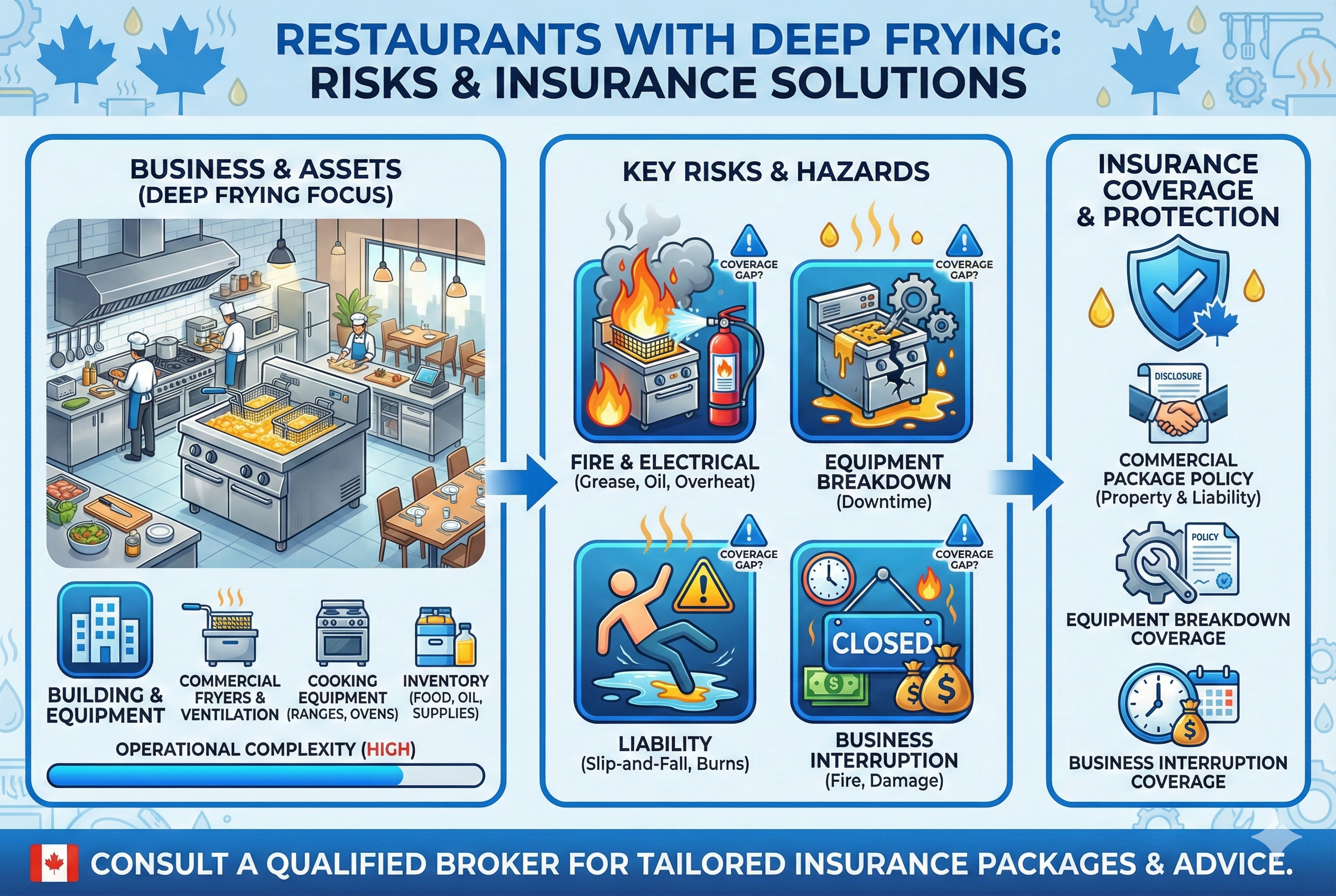
Restaurants with Deep Frying: Insurance Essentials for Canadian Food Businesses
January 2, 2026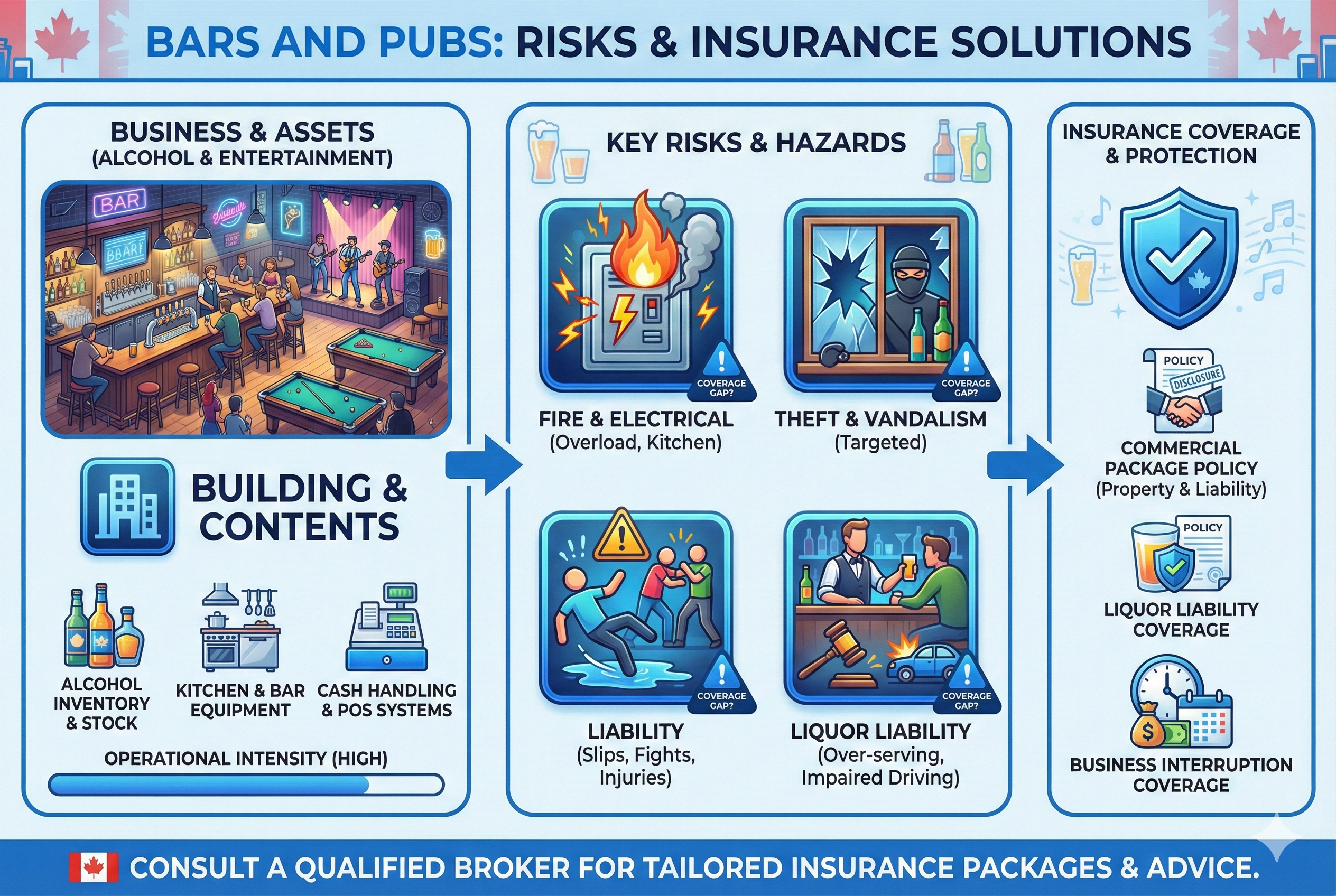
Bars and Pubs in Canada: Essential Insurance for High-Risk Hospitality Businesses
January 5, 2026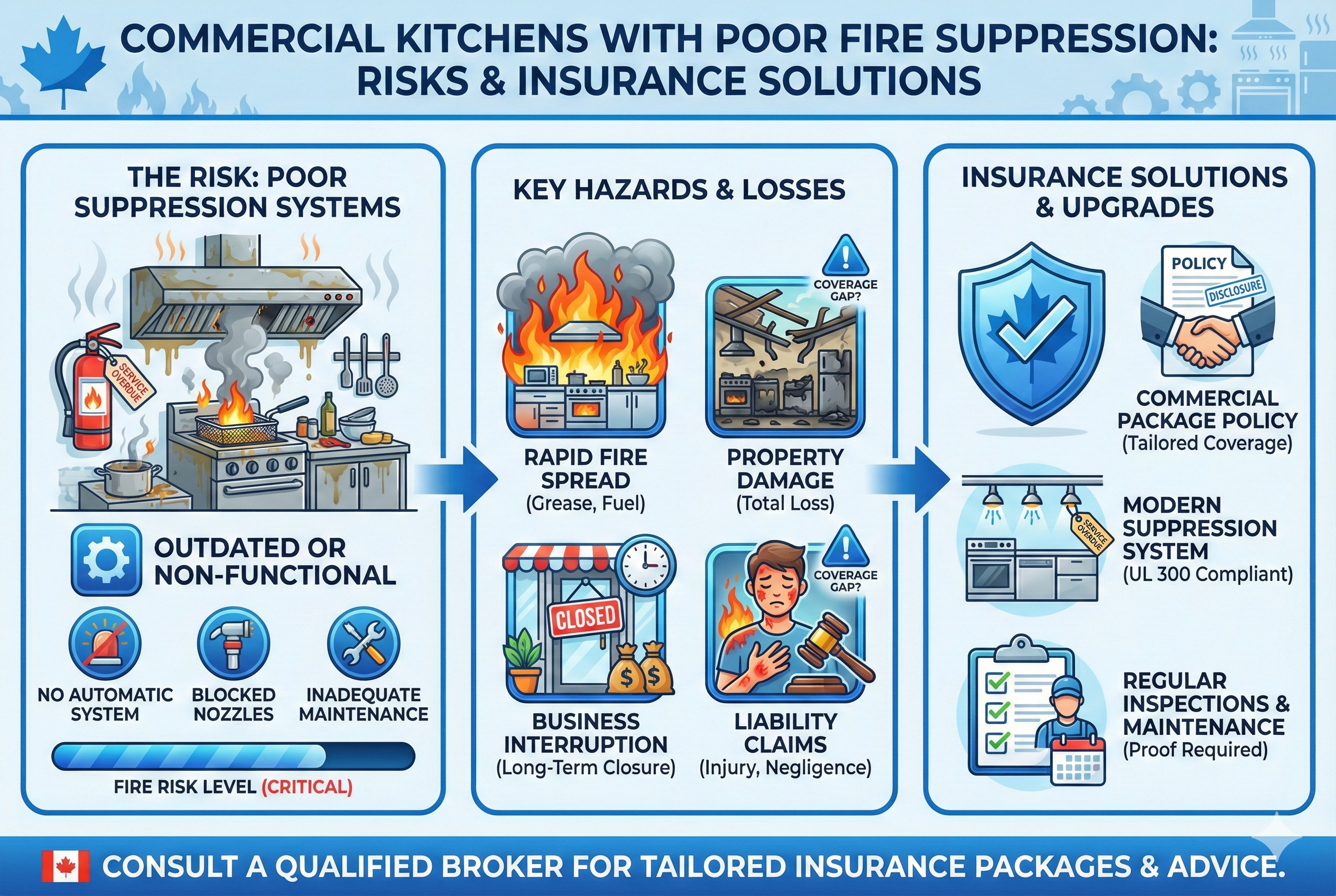
Commercial kitchens power restaurants, cafés, hotels, and catering operations across Canada—but without proper fire suppression, they become some of the most hazardous environments in the food-service industry. A single flare-up can escalate into a full-scale blaze in seconds. For any operator, understanding the insurance implications is essential.
Why Poor Fire Suppression Is a Serious Problem
Rapid Fire Spread
Grease, high heat, and open flames create conditions where small fires grow quickly—especially when suppression hoods or extinguishing systems aren’t functioning.
Non-Compliance Penalties
Canadian fire codes require working suppression systems. Poor maintenance can lead to fines, forced shutdowns, or denied insurance claims.
Costly Property Damage
Kitchen fires can destroy equipment, ventilation systems, and structural components in minutes.
Liability Risks
Inadequate suppression puts staff and patrons at risk, increasing exposure to injury-related claims.
Essential Insurance Considerations
Commercial Property Insurance – Covers fire damage but may exclude losses if suppression systems aren’t properly maintained.
General Liability Insurance – Protects against injury claims arising from kitchen-related incidents.
Equipment Breakdown – Covers malfunctioning hoods, exhaust fans, and suppression components.
Business Interruption Insurance – Replaces income during closures caused by fire or resulting repairs.
Final Thought
A kitchen without reliable fire suppression is a catastrophe waiting to happen. Canadian food-service businesses must maintain and regularly inspect these systems to remain insured, safe, and compliant.
Brokers can contact Total Risk Managers to discuss a risk.
This article is general information for insurance brokers. It is not advice, and it is not a quote or an offer of coverage. Policy wording decides what is covered. Coverage is arranged through a licensed insurance broker.