Firearms-Related Liability Insurance (U.S. Exposure)
Children’s Indoor Play Centres in Canada: Key Insurance Protection for High-Energy Spaces
January 12, 2026
Private Schools in Canada: Essential Insurance for Education Facilities
January 13, 2026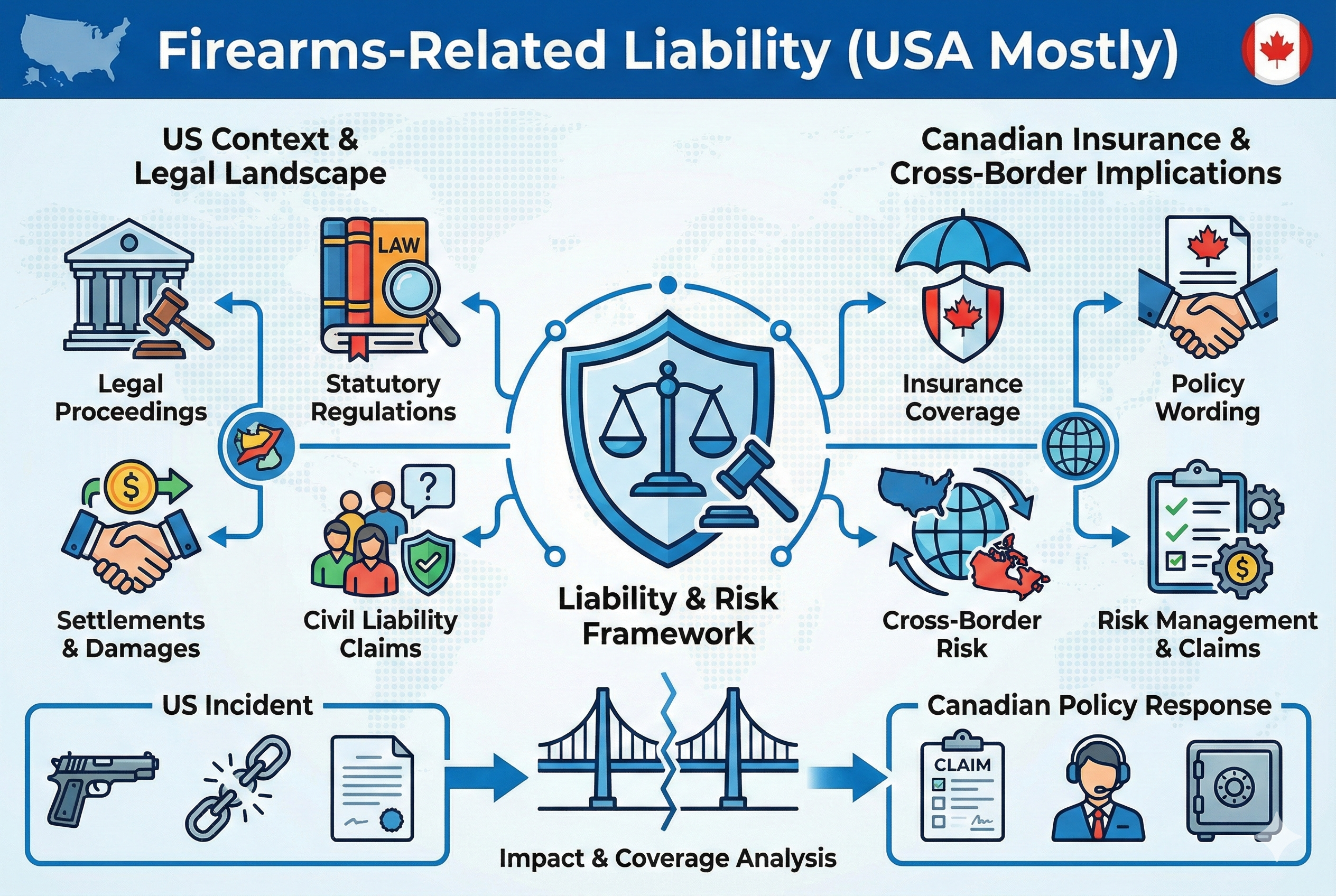
Canadian businesses connected to the firearms industry—such as manufacturers, distributors, exporters, sporting goods retailers, and shooting ranges—often face heightened liability, especially when operations or sales involve the United States. U.S. litigation severity and regulatory scrutiny make specialized insurance essential.
Why Firearms Liability Is High Risk
Accounts with U.S. exposure may encounter:
- Products liability claims tied to alleged defects or misuse
- Third-party bodily injury and property damage lawsuits
- Cross-border sales and export compliance risks
- Legal defense costs, even when claims are unfounded
- Contractual insurance requirements from U.S. partners
Standard Canadian policies often exclude or severely limit firearms-related risks.
What Does Firearms Liability Insurance Cover?
Coverage is typically placed in specialty markets and may include:
- Products & completed operations liability
- Legal defense and litigation costs
- Manufacturing and distribution liability
- U.S. jurisdiction and cross-border exposure
- Claims-made structures with strict controls
Underwriting usually requires detailed operations, safety protocols, and compliance documentation.
Why Canadian Expertise Matters
Canada-based brokers with access to international markets are critical for navigating exclusions, limits, and evolving U.S. legal trends.
Firearms-related liability insurance isn’t optional—it’s essential protection in a high-stakes environment.
Brokers can contact Total Risk Managers to discuss a risk.
This article is general information for insurance brokers. It is not advice, and it is not a quote or an offer of coverage. Policy wording decides what is covered. Coverage is arranged through a licensed insurance broker.