Remote Worker Camps in Canada: Why Specialized Insurance Is Essential for Safe, Reliable Operations
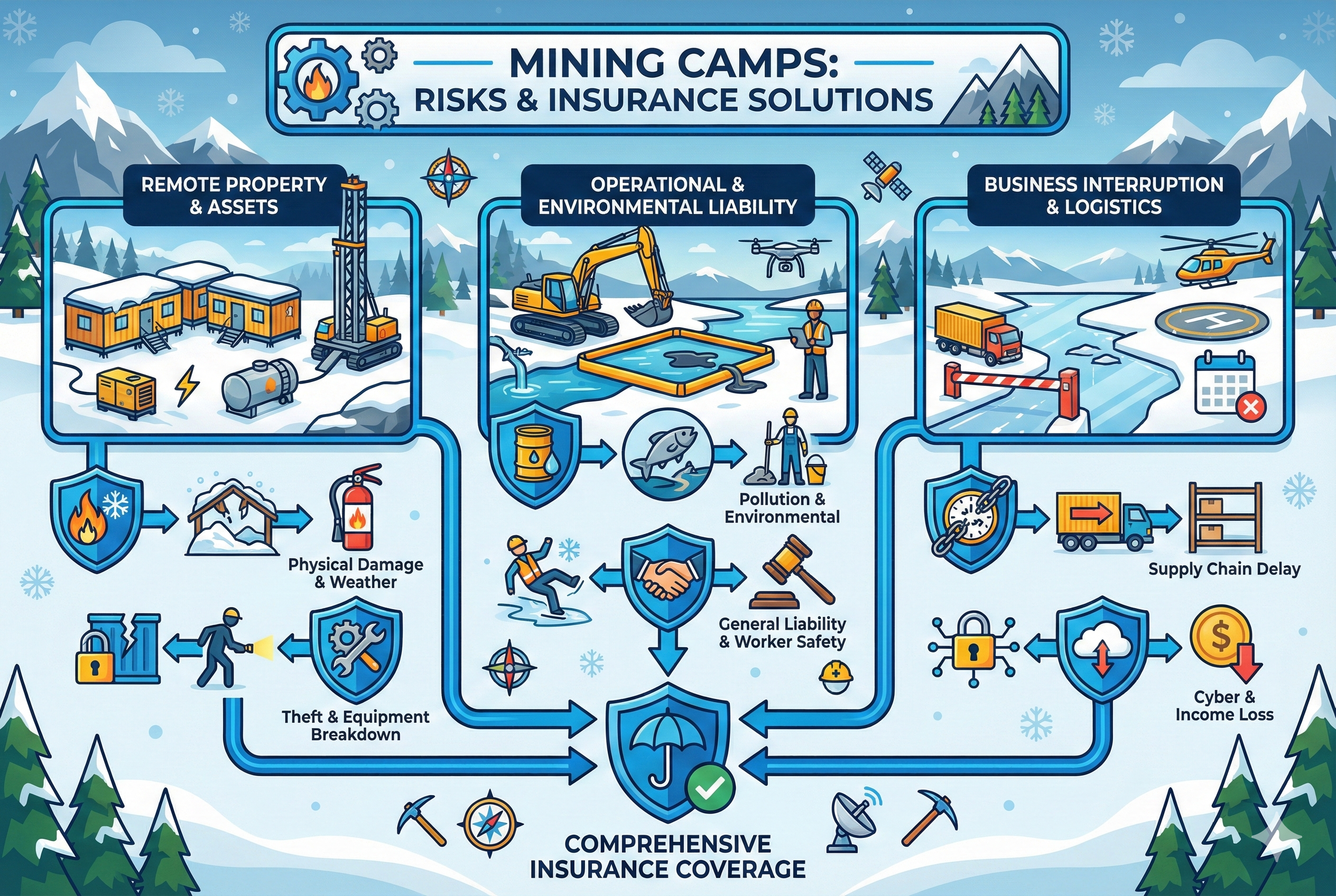
Mining Camps in Canada: Why Remote Operations Need Strong Insurance Protection
January 22, 2026
Farm Dwellings in Canada: Protecting Rural Homes with the Right Insurance
January 24, 2026Remote Worker Camps in Canada: Why Specialized Insurance Is Essential for Safe, Reliable Operations
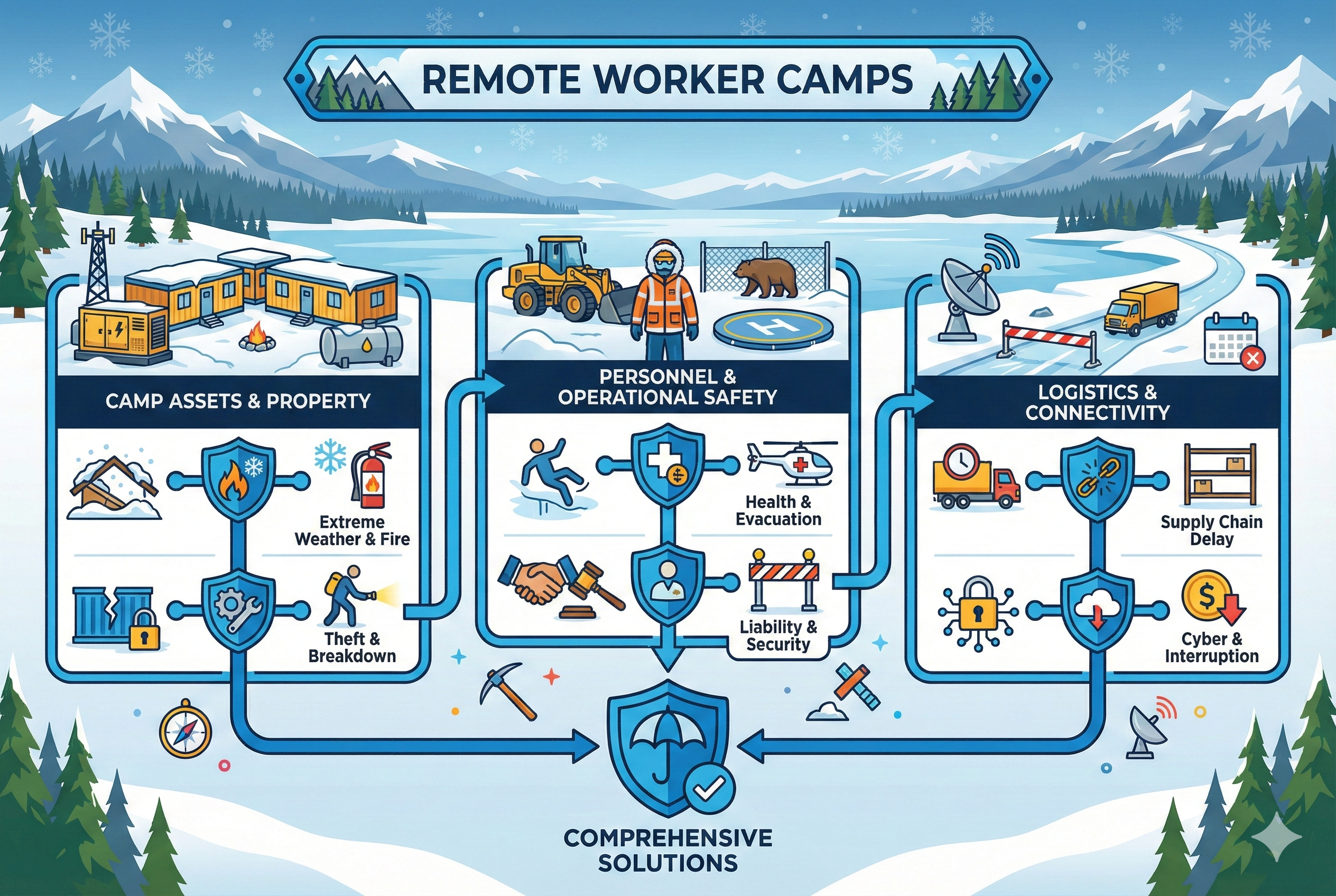
Remote worker camps support essential industries across Canada—from mining and forestry to energy, construction, and major infrastructure projects. These camps provide lodging, food services, recreation areas, transportation hubs, and medical support in isolated regions. But operating far from urban centres introduces unique risks that demand strong, tailored insurance protection.
Why Remote Worker Camps Face Elevated Risks
Extreme Weather Exposure
Blizzards, storms, and wildfires can damage buildings, disrupt supply lines, and jeopardize worker safety.
Infrastructure & Equipment Failure
Generators, water systems, HVAC units, and fuel storage tanks are critical—and costly to repair when they fail.
Worker Injury Risks
Slippery walkways, rugged terrain, transportation hazards, and round-the-clock operations heighten liability exposure.
Remote Location Challenges
Emergency response, evacuation, and medical care take longer in isolated areas, requiring added planning and coverage.
Essential Insurance Coverages for Remote Worker Camps
Commercial Property Insurance – Covers bunkhouses, kitchens, recreation buildings, and utilities.
General Liability Insurance – Protects against worker and visitor injury claims.
Equipment Breakdown Insurance – Critical for generators, heating, cooling, and water systems.
Environmental Liability Insurance – Covers spills and fuel-related contamination.
Business Interruption Insurance – Ensures operational continuity after an insured loss.
Final Thought
Remote worker camps are vital to Canada’s most demanding industries—but isolation brings significant risk. With the right insurance, camps can remain safe, functional, and resilient in any conditions.
Brokers can contact Total Risk Managers to discuss a risk.
This article is general information for insurance brokers. It is not advice, and it is not a quote or an offer of coverage. Policy wording decides what is covered. Coverage is arranged through a licensed insurance broker.