Resorts and Lodges: Essential Insurance Considerations for Canadian Owners
Hotels and Motels: Essential Insurance Considerations for Canadian Property Owners
December 16, 2025
Seasonal Dwellings: Insurance Considerations for Canadian Property Owners
December 18, 2025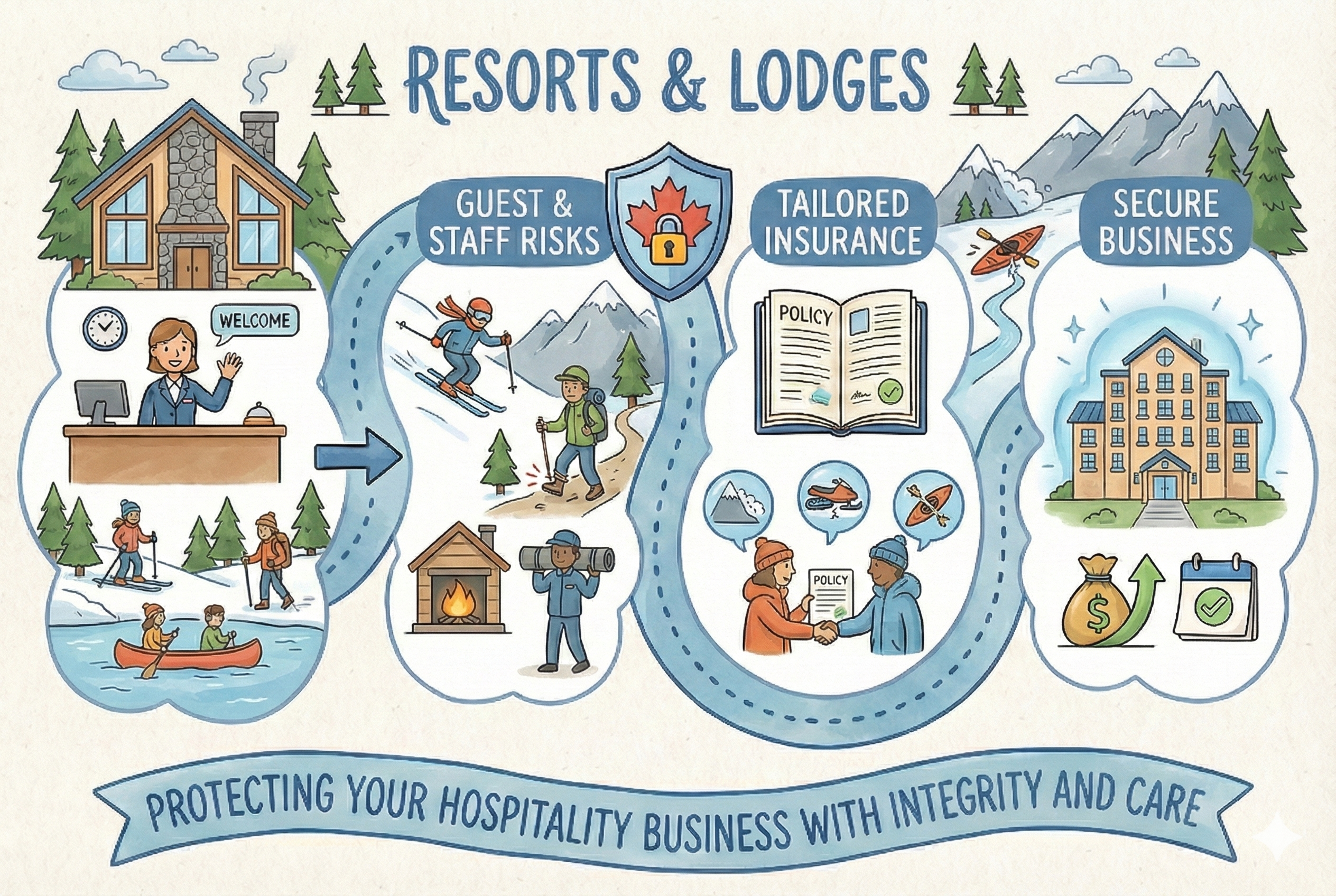
Resorts and lodges are cornerstones of Canada’s tourism industry, drawing visitors to the country’s most scenic destinations. Like any hospitality business, they face distinct insurance challenges—from guest safety to property protection. Here’s what owners need to know to ensure their resorts and lodges are properly covered.
Risks for Resorts and Lodges
• Property Damage
Because many resorts and lodges are located in remote or natural settings, they are more susceptible to fire, severe weather, natural disasters, and vandalism—often resulting in costly repairs or replacements.
• Liability Claims
Recreational activities such as hiking, skiing, or swimming increase the likelihood of accidents or injuries, which can lead to significant liability claims.
• Business Interruption
Damage from events like fires or floods may force temporary closure, resulting in substantial income loss.
Key Insurance Considerations for Resorts and Lodges
• Property Insurance
Covers buildings, cabins, and recreational facilities against damage caused by fire, theft, severe weather, and other insured risks.
• General Liability Insurance
Provides protection against claims involving bodily injury or accidents on the property, including those related to on-site recreational activities.
• Business Interruption Insurance
Replaces lost income if your operation must close due to an insured event, helping stabilize finances during recovery.
Tips for Protecting Your Resort or Lodge
• Safety Measures
Implement robust safety protocols and secure high-risk areas—such as pools, trail access points, and equipment storage—to help prevent accidents.
• Employee Training
Ensure staff are trained in guest safety, equipment handling, and emergency procedures to reduce risk and improve response readiness.
• Regular Inspections
Conduct routine inspections of buildings, equipment, and safety systems to maintain a safe environment and identify issues early.
Final Thoughts
Owning a resort or lodge in Canada offers exceptional business opportunities but comes with unique risks. With the right insurance in place, you can safeguard your property, protect your guests, and focus on delivering unforgettable experiences.
Brokers can contact Total Risk Managers to discuss a risk.
This article is general information for insurance brokers. It is not advice, and it is not a quote or an offer of coverage. Policy wording decides what is covered. Coverage is arranged through a licensed insurance broker.