Unprotected Properties (FUS 3–5): Insurance Considerations for Property Owners

Seasonal Dwellings: Insurance Considerations for Canadian Property Owners
December 18, 2025
Rural Properties with Limited Fire Response: What You Need to Know
December 20, 2025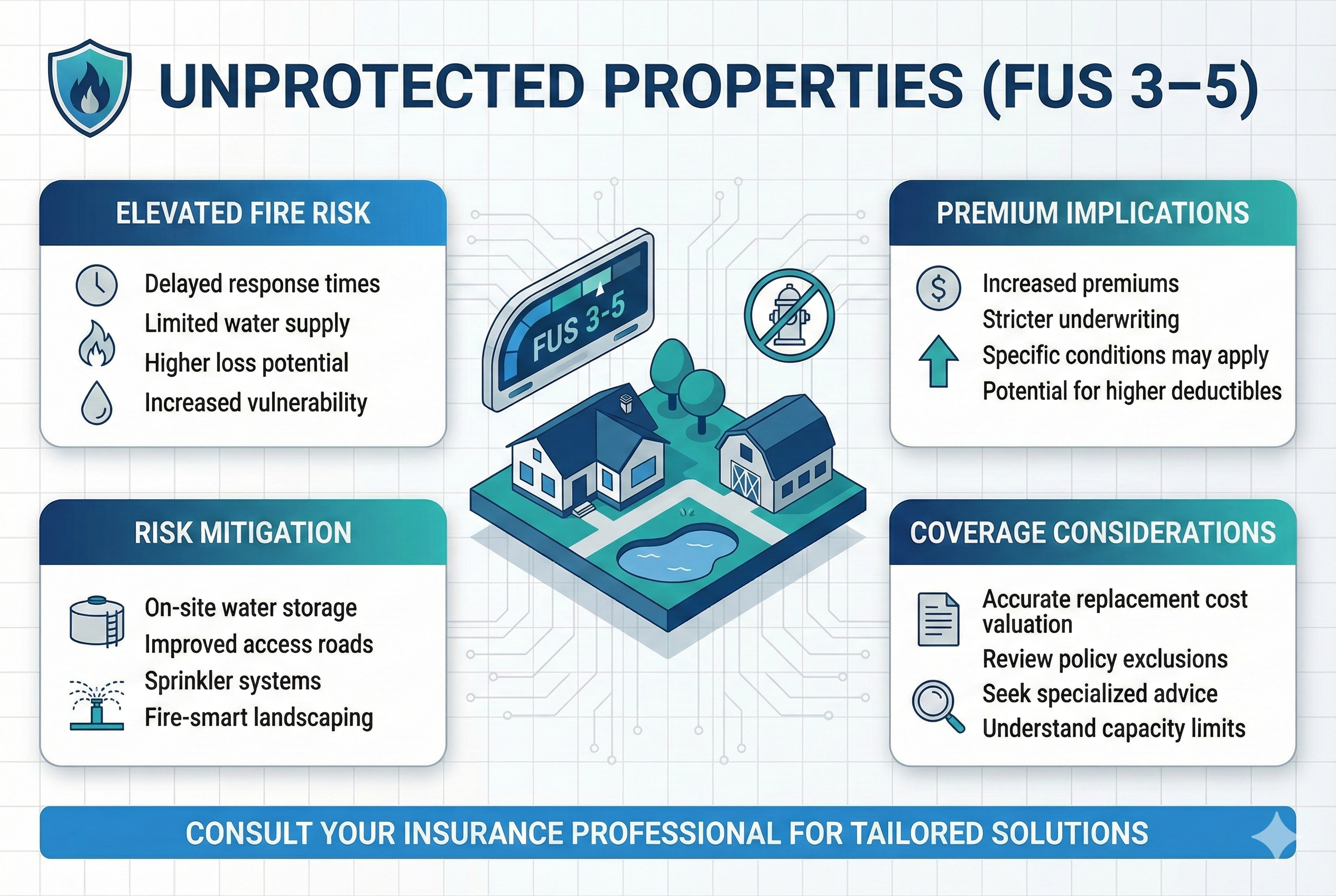
In Canada, Fire Underwriting Survey (FUS) ratings play an important role in determining insurance premiums and coverage options. Properties rated FUS 3–5 fall into unprotected or high-risk zones, meaning they have limited access to fire protection services. These ratings can significantly affect both the availability and cost of insurance. Here’s what property owners should know.
What Does FUS 3–5 Mean?
• FUS 3–5 Ratings
These ratings apply to properties located in areas with inadequate or distant fire protection—often rural communities or locations outside municipal fire service boundaries.
• Risk of Fire Damage
Without prompt access to fire services, these properties face a greater likelihood of severe fire damage, increasing both the cost and complexity of insuring them.
Insurance Challenges for Unprotected Properties
• Higher Premiums
Because of the elevated risk, properties in FUS 3–5 zones typically face higher premiums for fire and property insurance.
• Limited Coverage
Some insurers may restrict coverage or decline to insure properties in unprotected areas, particularly those far from fire departments or hydrants.
• Additional Fire Prevention Measures
To offset risk, insurers may require the installation of fire prevention systems such as sprinklers, alarms, fire breaks, or other safety features.
Tips for Insuring Unprotected Properties
• Work with a Broker
An experienced insurance broker can help identify carriers willing to insure high-risk properties and assist in securing the most suitable coverage.
• Invest in Fire Protection
Installing sprinkler systems, fire alarms, and ensuring access to reliable water sources can help reduce risk and may lower premiums.
• Ensure Proper Documentation
Maintain detailed records of fire prevention investments and routine maintenance to support insurance applications and demonstrate risk reduction.
Final Thoughts
Owning an unprotected property with an FUS 3–5 rating presents higher risks and insurance challenges. But with proactive fire-prevention measures and the right coverage, you can protect your property and maintain peace of mind.
Brokers can contact Total Risk Managers to discuss a risk.
This article is general information for insurance brokers. It is not advice, and it is not a quote or an offer of coverage. Policy wording decides what is covered. Coverage is arranged through a licensed insurance broker.