Hazardous Waste Hauling: Insurance Essentials in Canada

Mold Remediation Contractors: Insurance Essentials in Canada
March 23, 2026
Scaffolding Companies: Insurance Essentials in Canada
March 25, 2026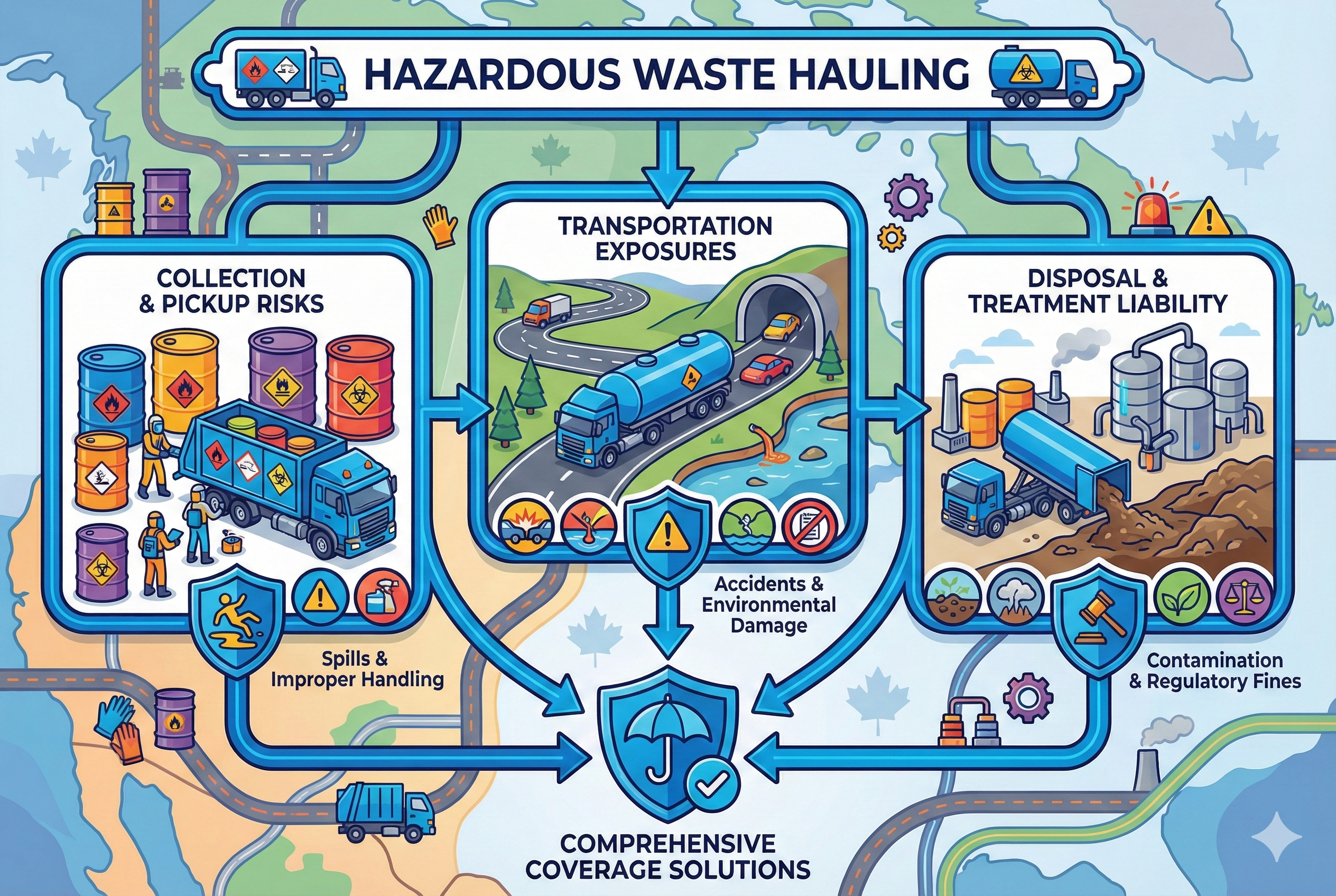
Transporting hazardous waste—including chemicals, medical waste, contaminated soil, or industrial byproducts—is one of the highest-risk activities in Canada’s environmental sector. One spill or accident can trigger environmental damage, injuries, regulatory penalties, and multi-million-dollar cleanup costs.
Key Risks Hazardous Waste Haulers Face
This work commonly involves:
- Spills, leaks, or container failures during transport
- Traffic accidents involving dangerous materials
- Environmental contamination of soil or waterways
- Exposure claims from workers or the public
- Regulatory investigations and fines
Claims can be immediate—or emerge years later.
Essential Insurance Coverages
- Auto Liability (High Limits) – Core coverage for transport risks
- Transportation Pollution Liability – Covers spills during loading, transit, and unloading
- Commercial General Liability (CGL) – Third-party injury and property damage
- Contractors Pollution Liability (CPL) – For handling and temporary storage exposures
- Cargo / Stock Throughput Insurance – Protects transported materials
- WSIB / Workers’ Compensation – Mandatory employee protection
- Umbrella Liability – Added protection for catastrophic events
Risk Management Tips
- Comply with federal and provincial transport regulations
- Maintain secure containment and spill-response plans
- Train drivers in hazardous materials handling
- Keep detailed manifests and documentation
Final Thought
Hazardous waste hauling leaves zero room for error. The right Canadian insurance program safeguards your people, your vehicles, and the environment you’re entrusted to protect. 🇨🇦
Brokers can contact Total Risk Managers to discuss a risk.
This article is general information for insurance brokers. It is not advice, and it is not a quote or an offer of coverage. Policy wording decides what is covered. Coverage is arranged through a licensed insurance broker.